
Opening: Monday, 4 May 2026, 7 p.m.
Opening speech: Johan Nane Simonsen
Existence does not occur in isolation, but through relationships. People, things, and environments are embedded in a network of complex and dynamic fields of relations. These relations are constantly shifting through ongoing processes of action and interaction. Identities form, stability emerges, and dependencies or ruptures occur. Within this relational network, questions and possibilities arise for the individual subject concerning responsibility, decision-making, and boundaries. The multimedia artists featured in this exhibition explore various aspects and constellations of this theme. Some situate artworks or performative actions in relation to things, materials, bodies, space, the gaze, and/or the viewer. Others engage in collaborative modes of artistic cooperation. Further positions examine how individuals are shaped by their relationships to history, culture, and politics, and what tensions may arise between personal memories or experiences and public structures.
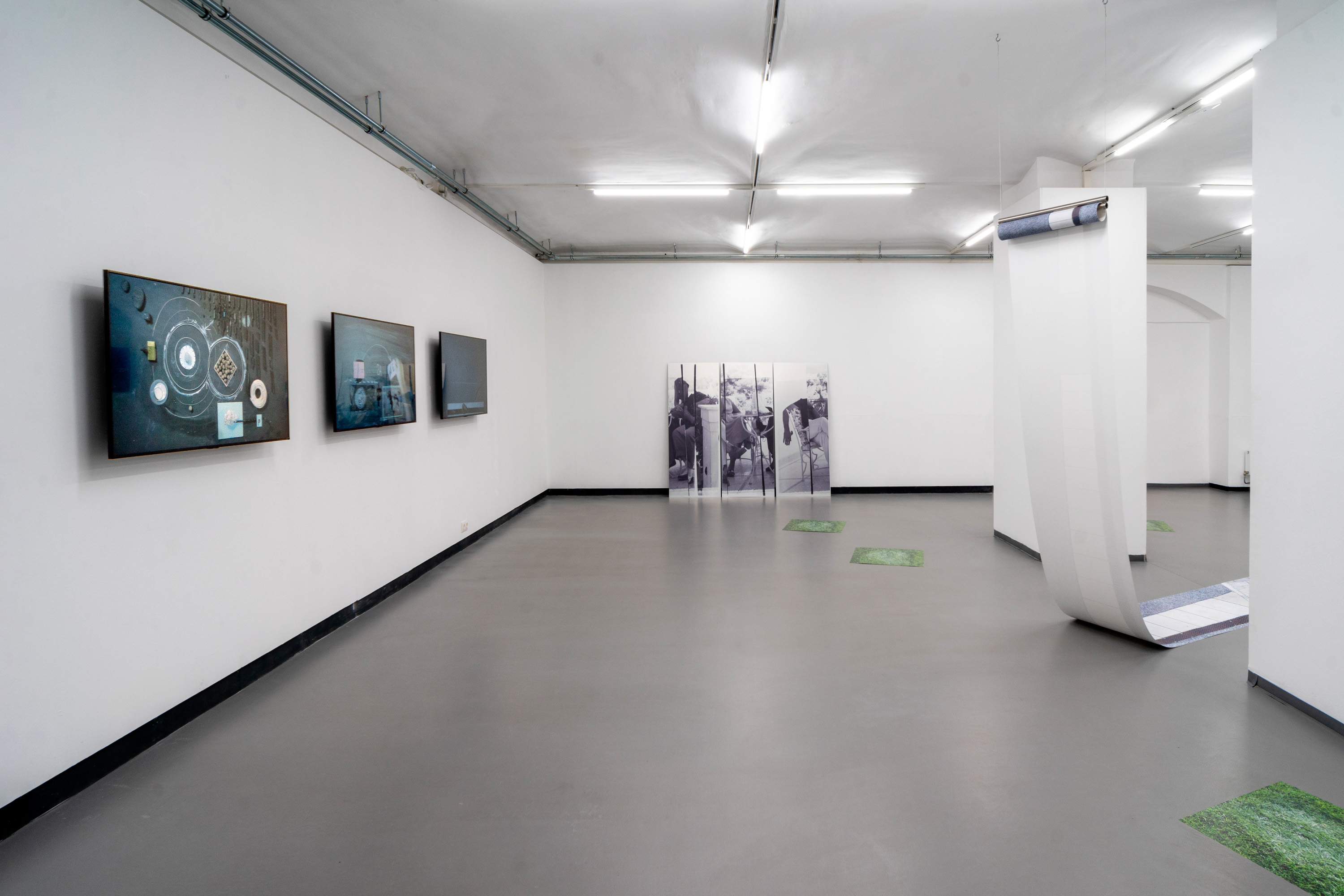
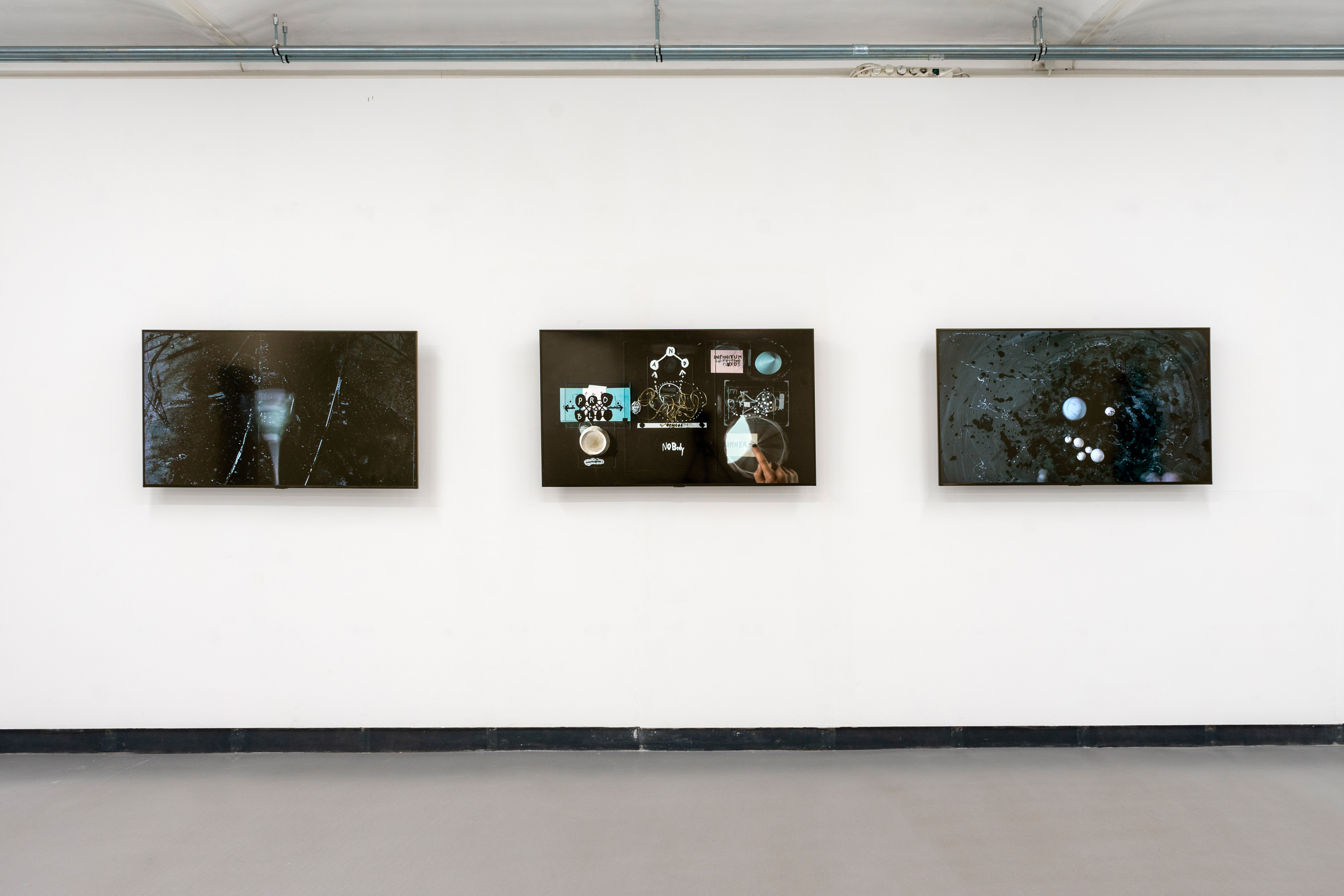
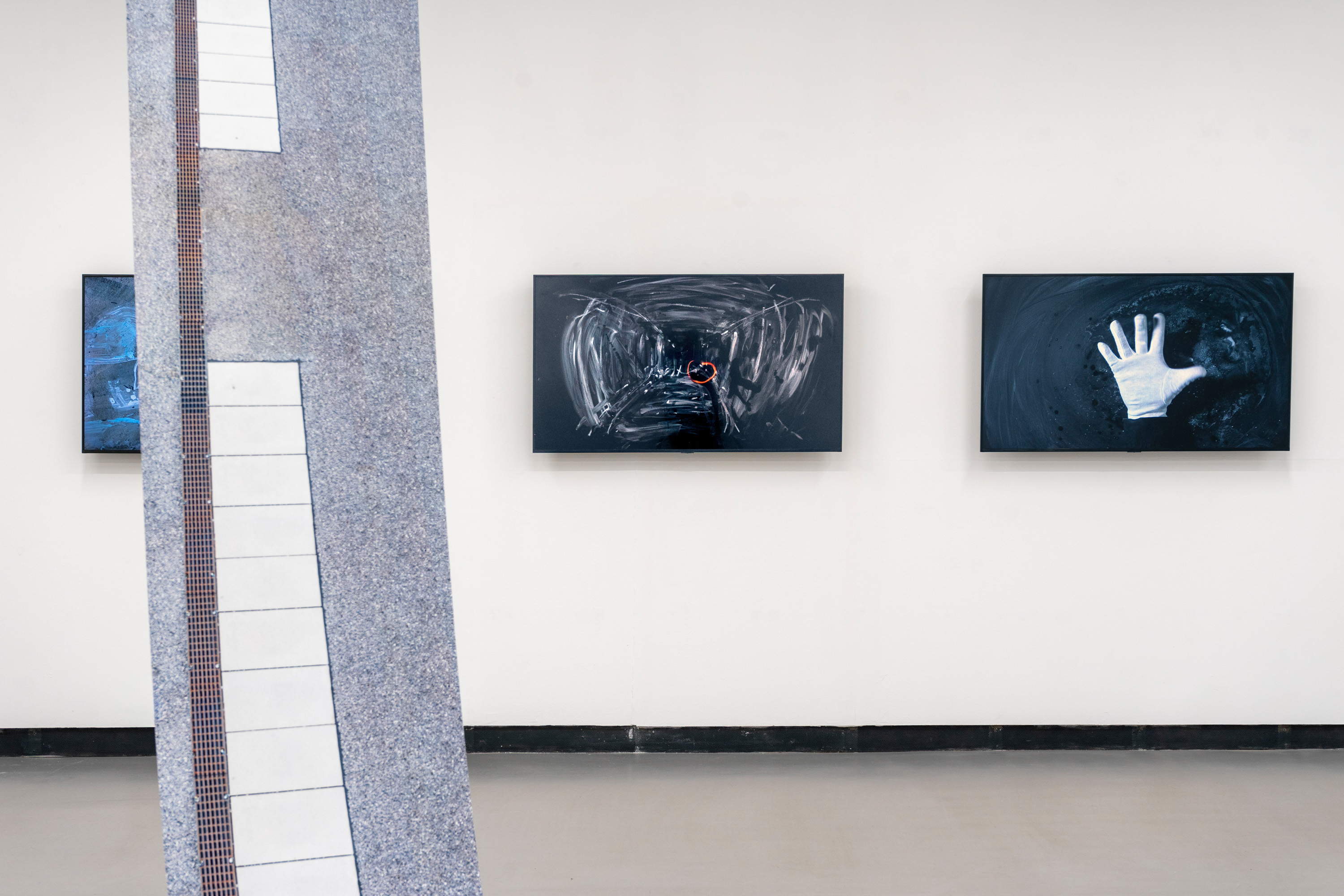
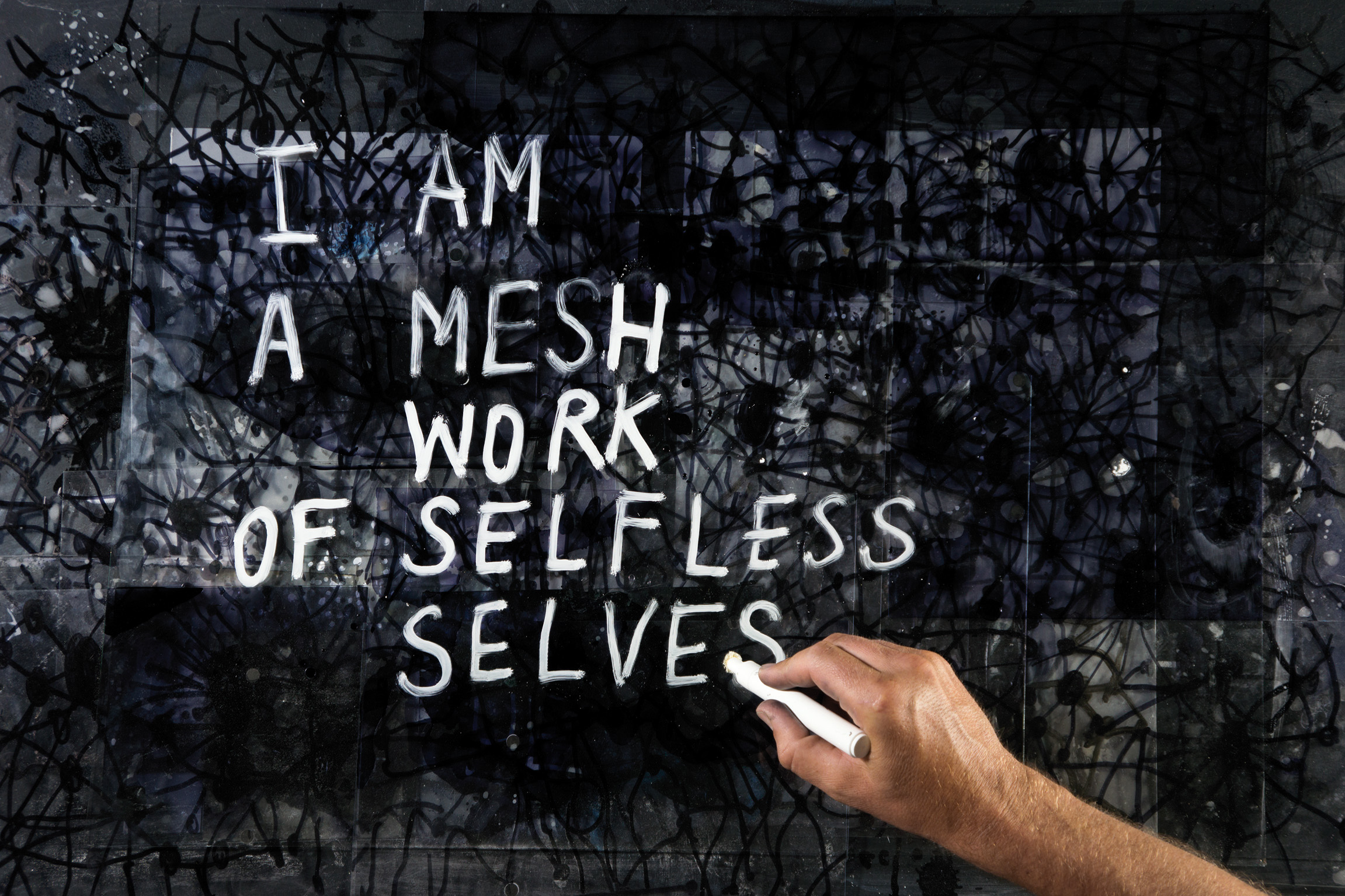
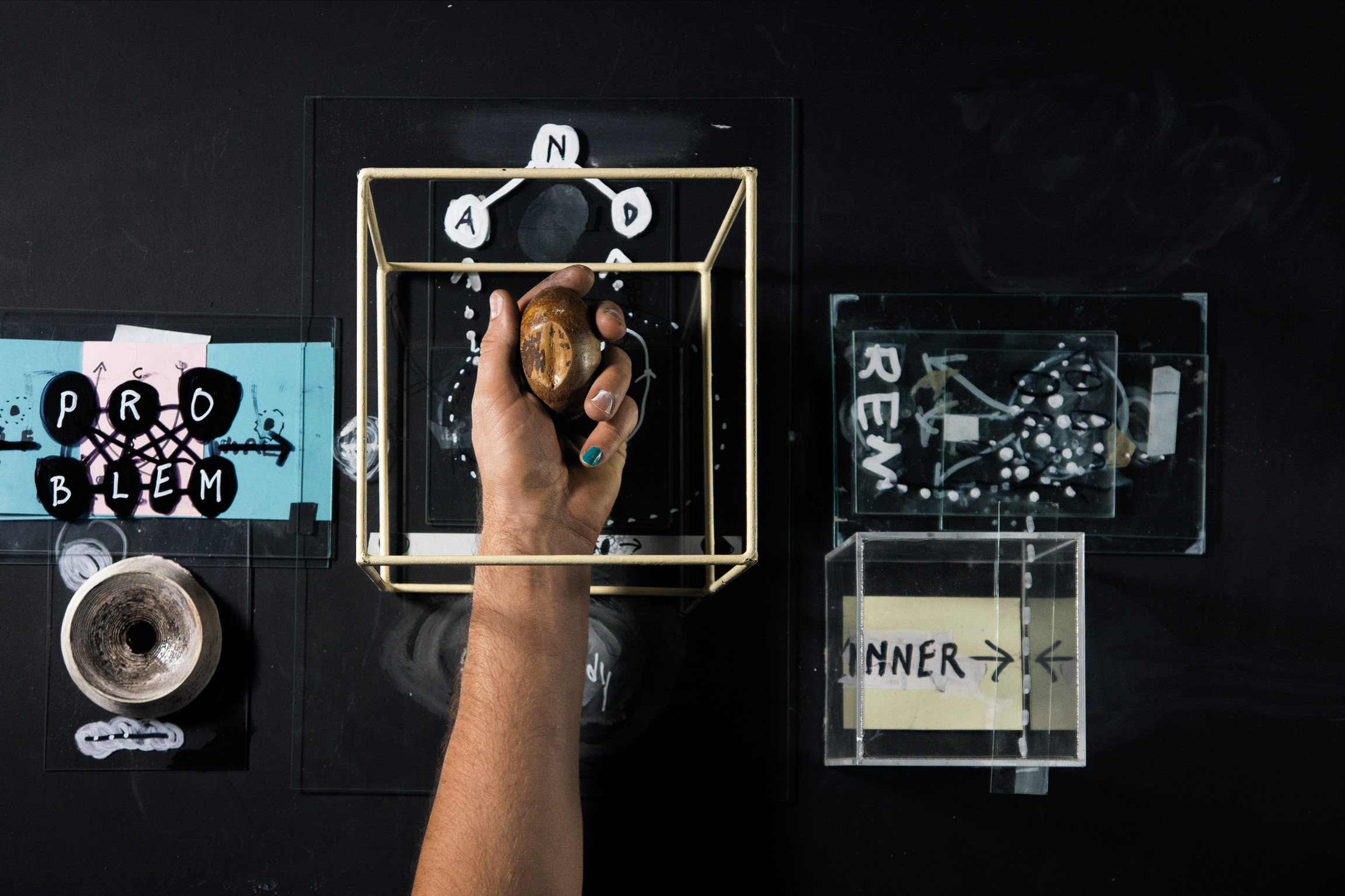
Nikolaus Gansterer’s three-channel video installation, untertagüberbau, combines animation, live drawing, lecture-performance, and studio-based experiments. Arranged around a kind of laboratory table, the work unfolds as a continuous flow of gestures and images, in which drawing functions as a method of thinking, testing, and negotiating unforeseen relations between materials, bodies, and environments. Gansterer’s critical yet playful approach draws on artistic means to translate the visual languages of scientific experimentation into new contexts. Employing paper, chalk, water, glass, organic elements, and living creatures—such as snails—he investigates processes of observation and transformation. These actions generate a shifting network of relations shaped by contact, movement, and temporal layering. untertagüberbau—underground work (invisible thought processes) in relation to architectural superstructures—provides the ground for constantly shifting, contingent relations, nonlinear perception, and associative thinking.
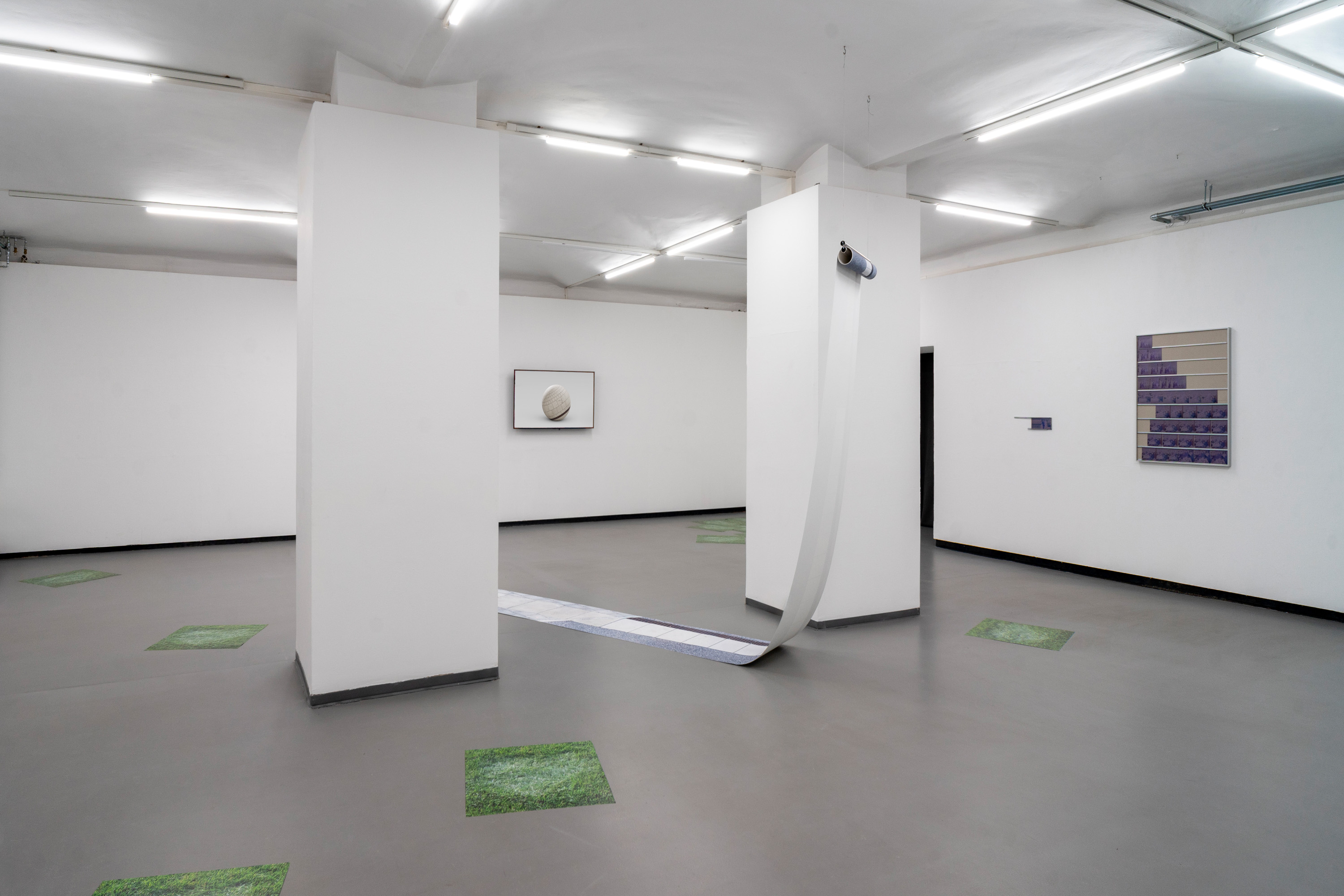
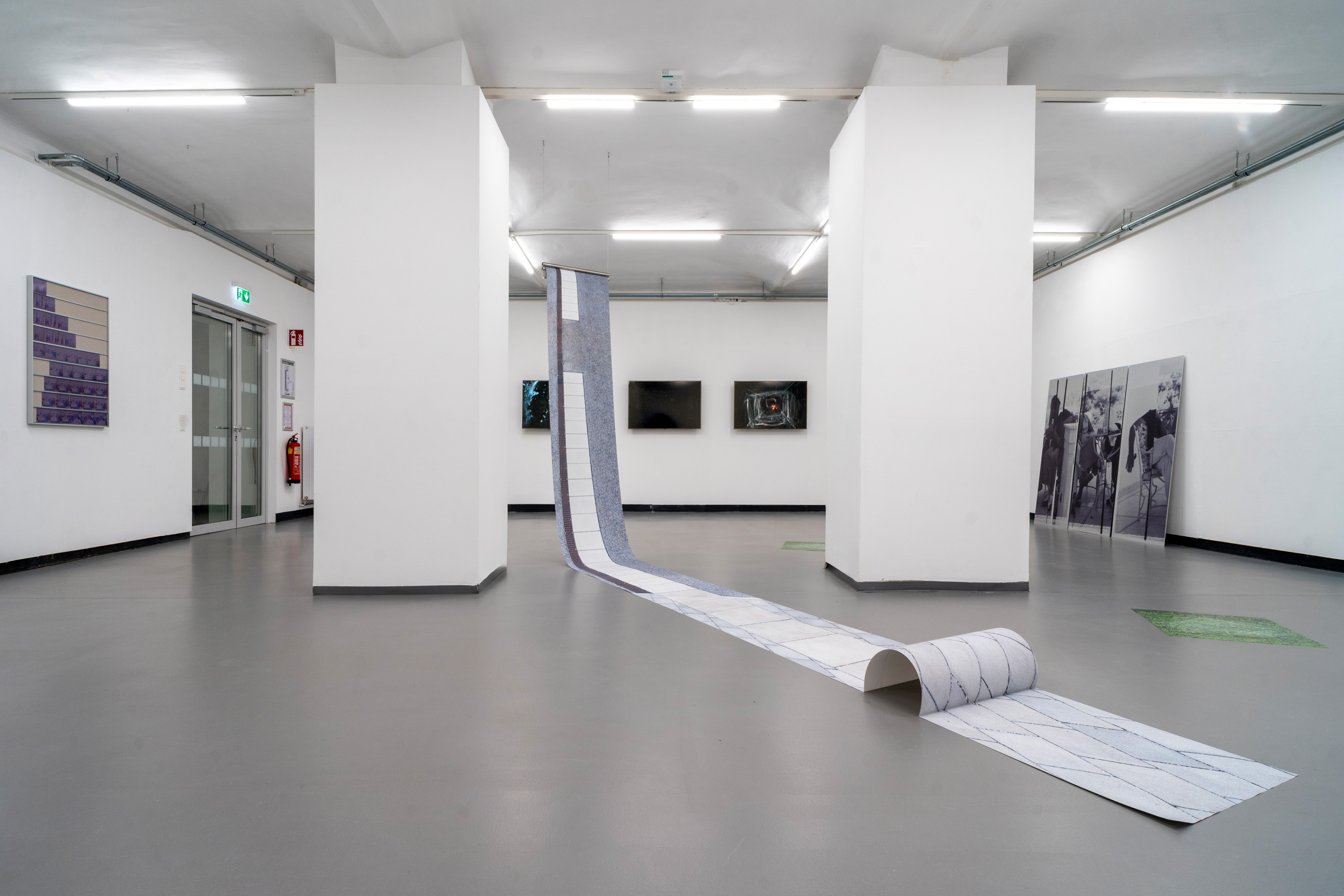
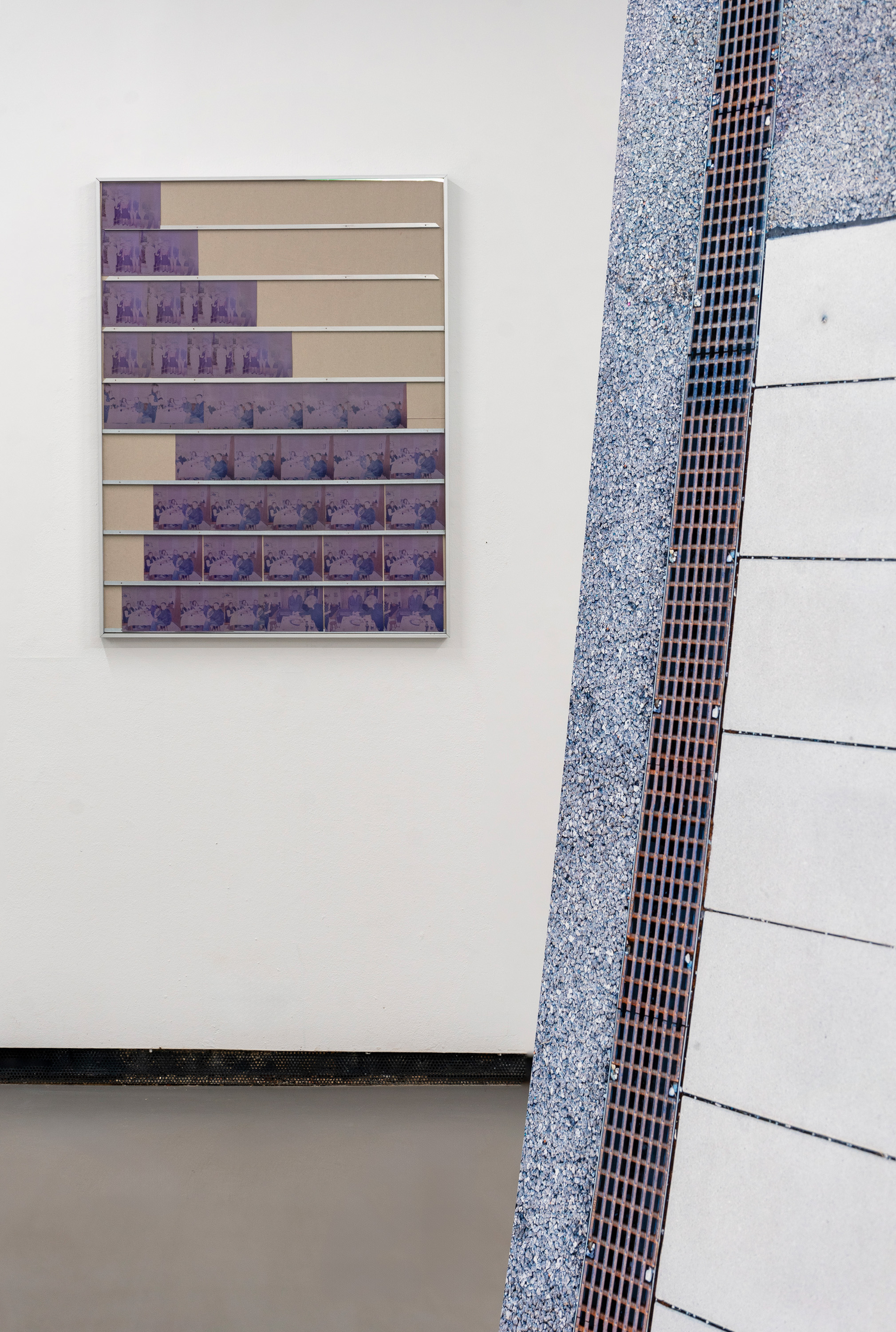
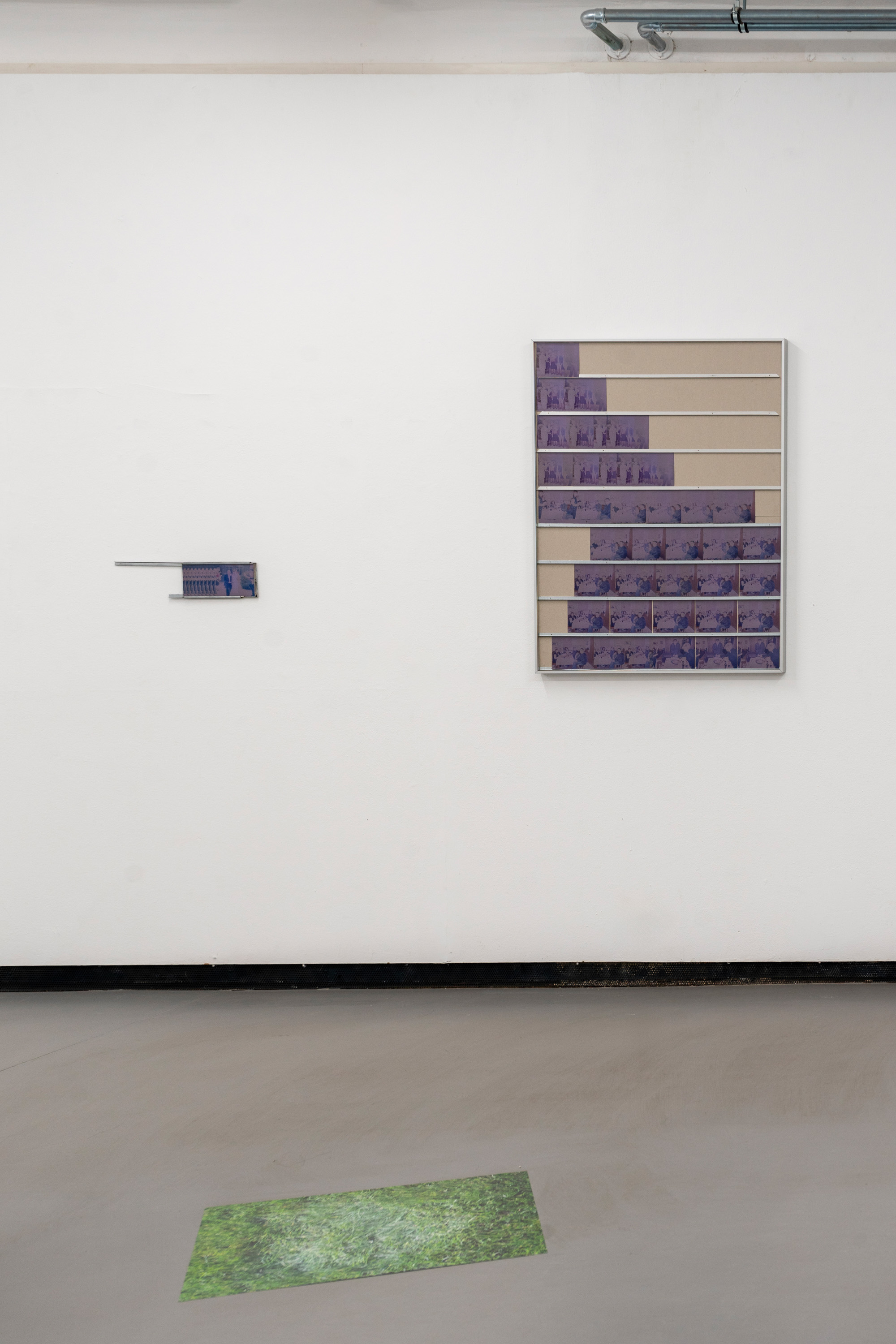
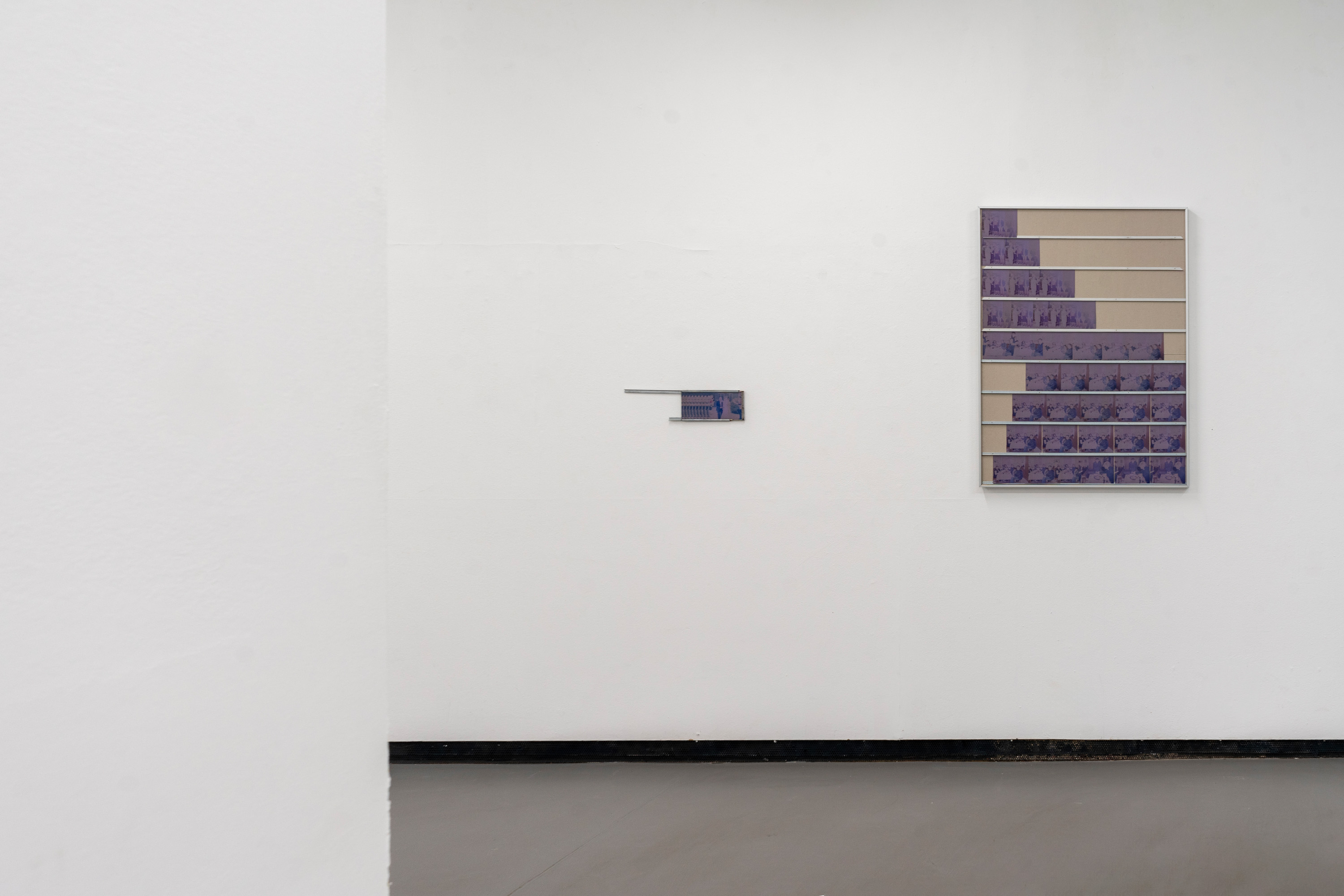
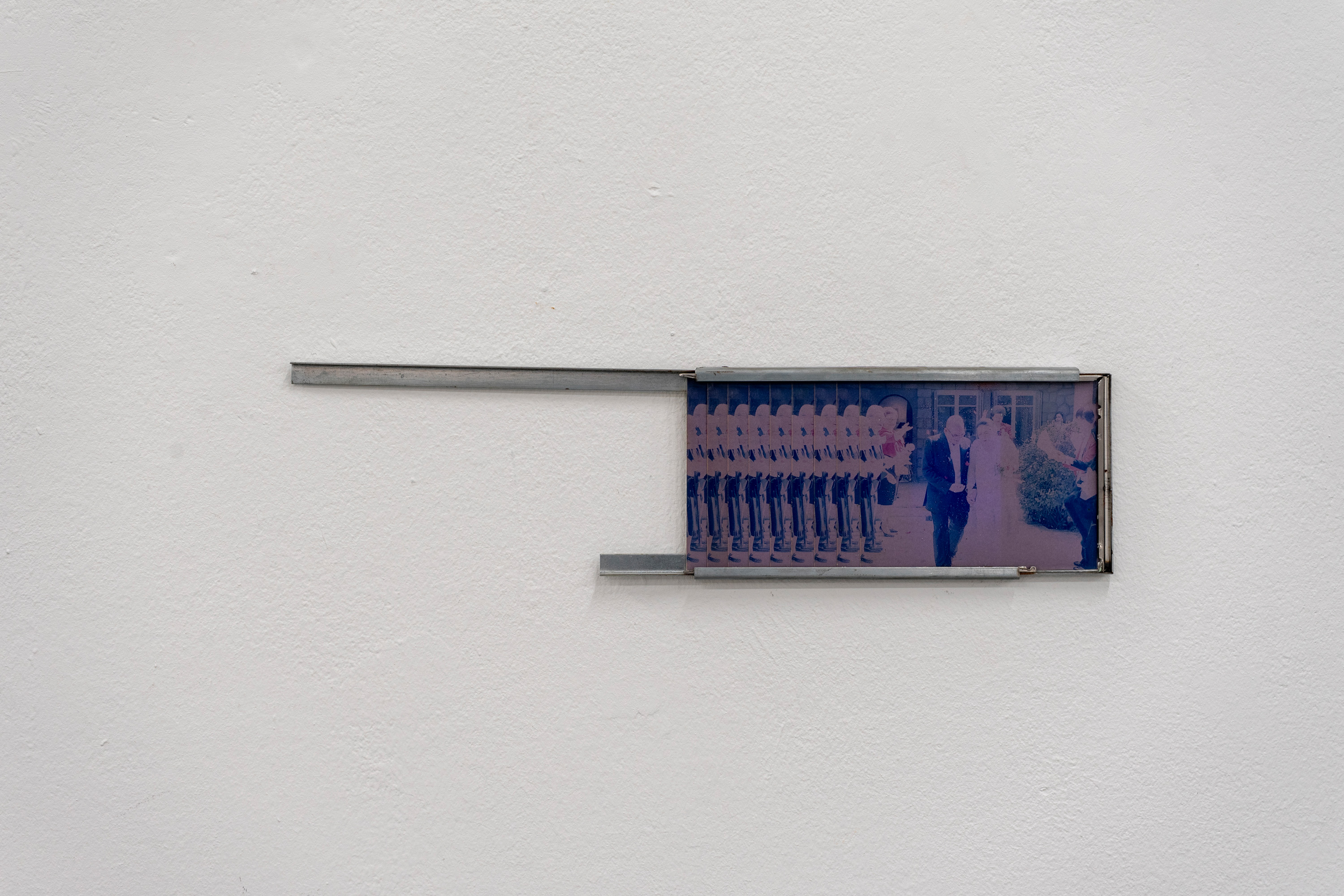
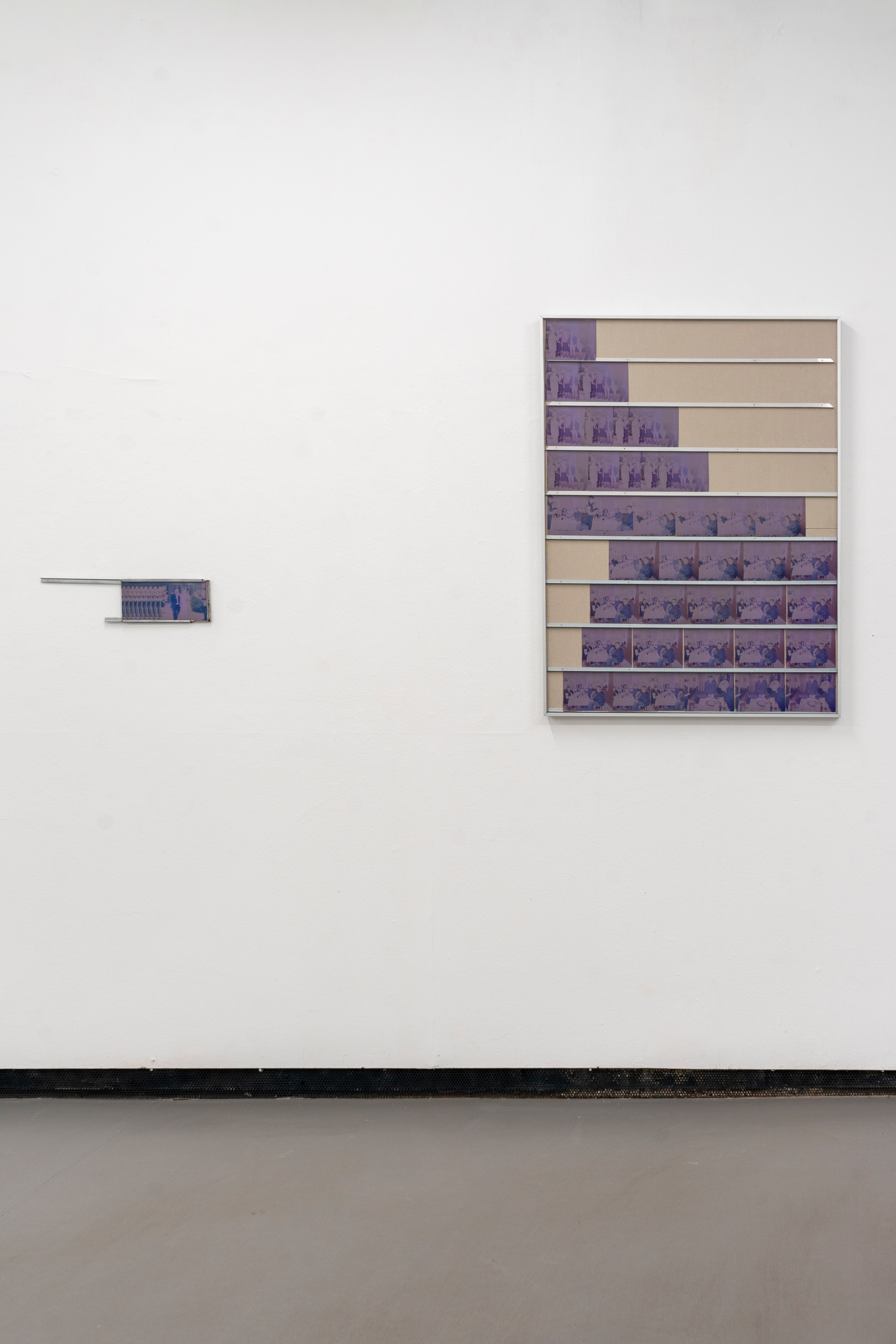
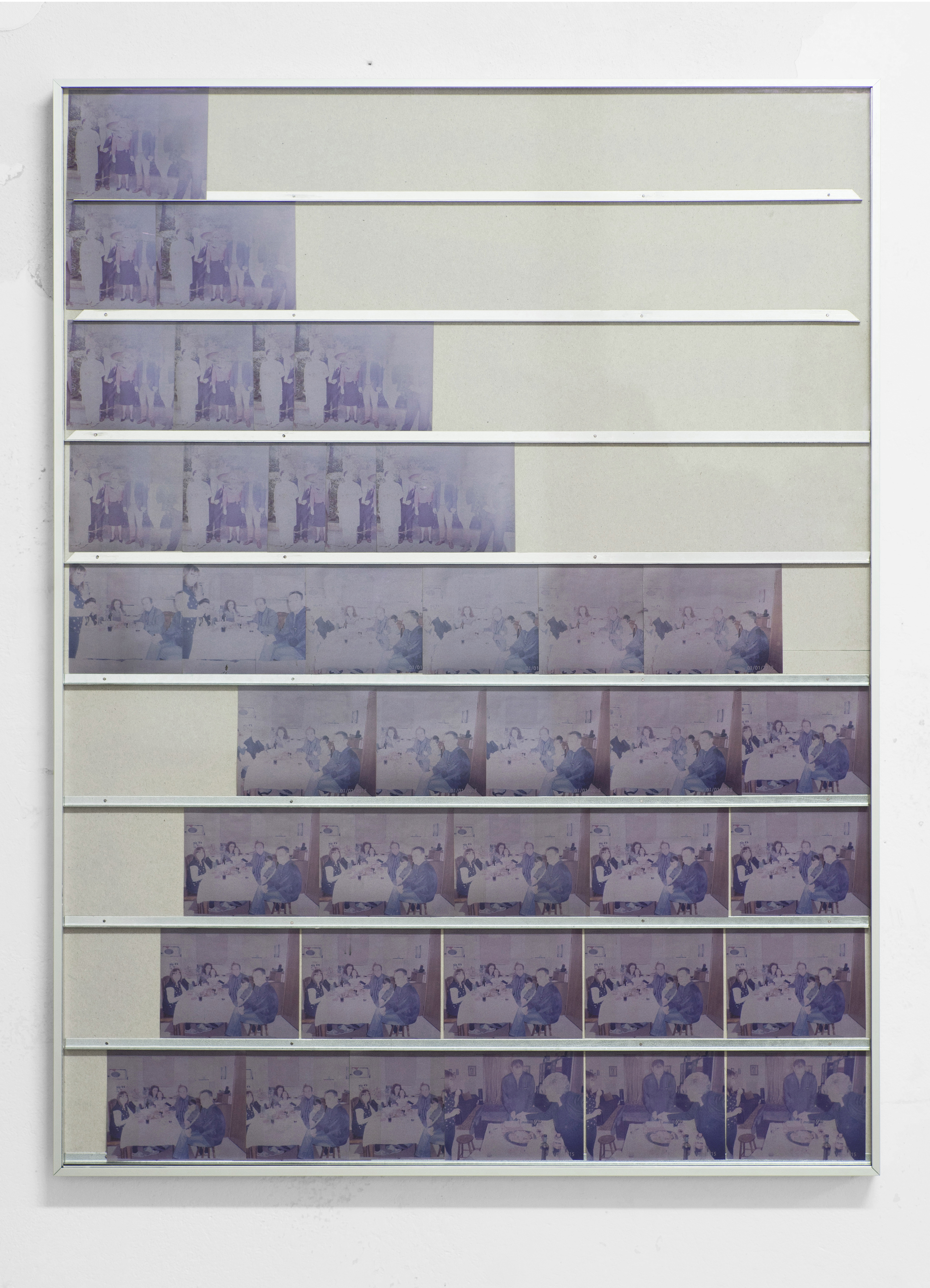
Apollon Glykas & Ilias Sipsas work with material from photographic archives, both exploring the discrepancy between representation and memory. Apollon Glykas brings images from two series into dialogue. Internally presents photographs of a wedding, a celebration, and a family gathering. A technical error has blurred these private images, rendering them unsuitable as documents of remembrance. What little remains recognizable reflects the workings of memory, which does not retain anything in stable form but is shaped by ever-changing experience. Through the serial repetition of the images, the same scene appears increasingly blurred and more distant each time. In Timeline, nine identical photographs of a wedding from the same archive are arranged linearly and partially overlap. They can be read like a film—albeit one that repeats the same moment. In both cases, the photographic image no longer functions as a reliable document of an event; instead, the relationship between time, memory, and representation is renegotiated.
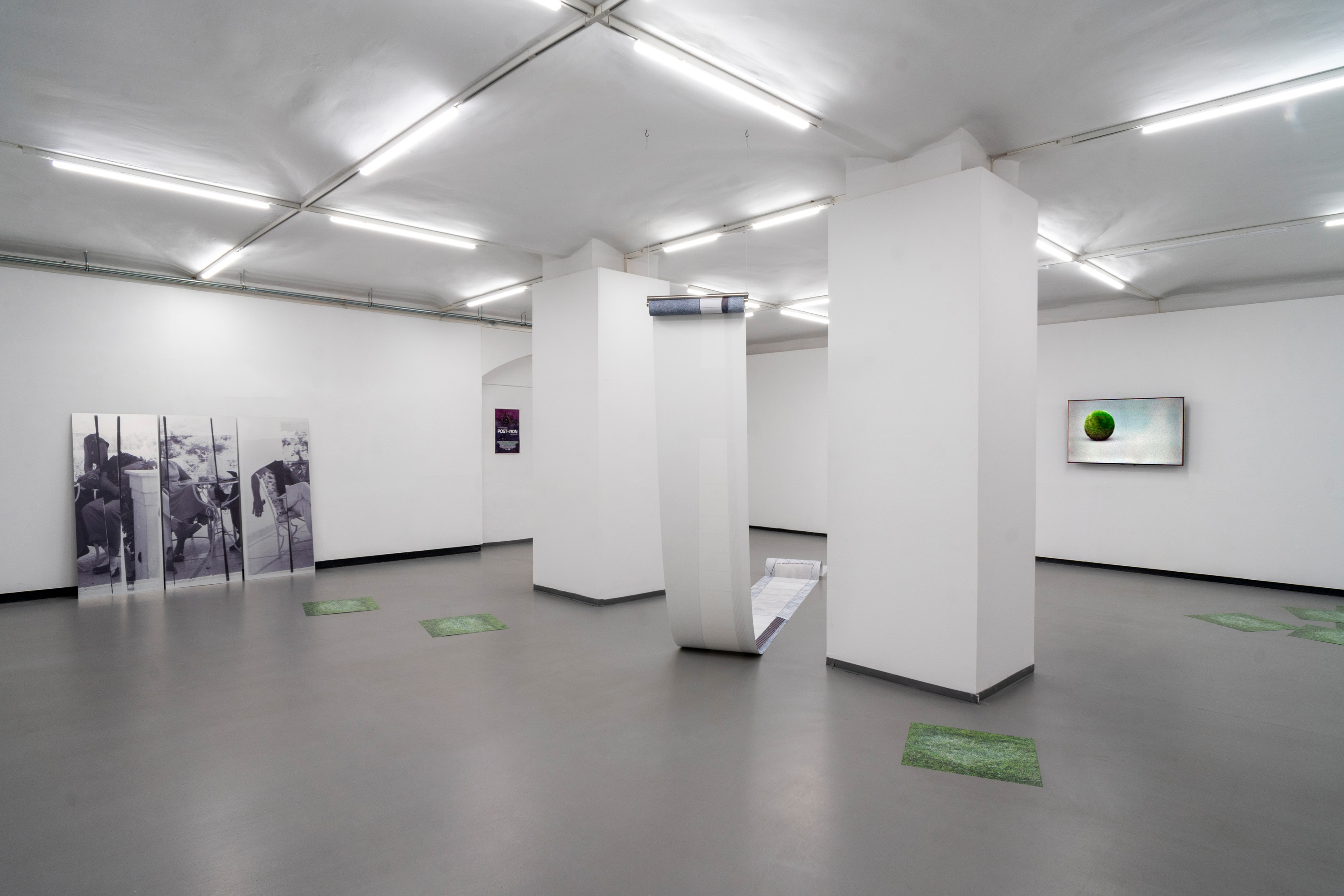
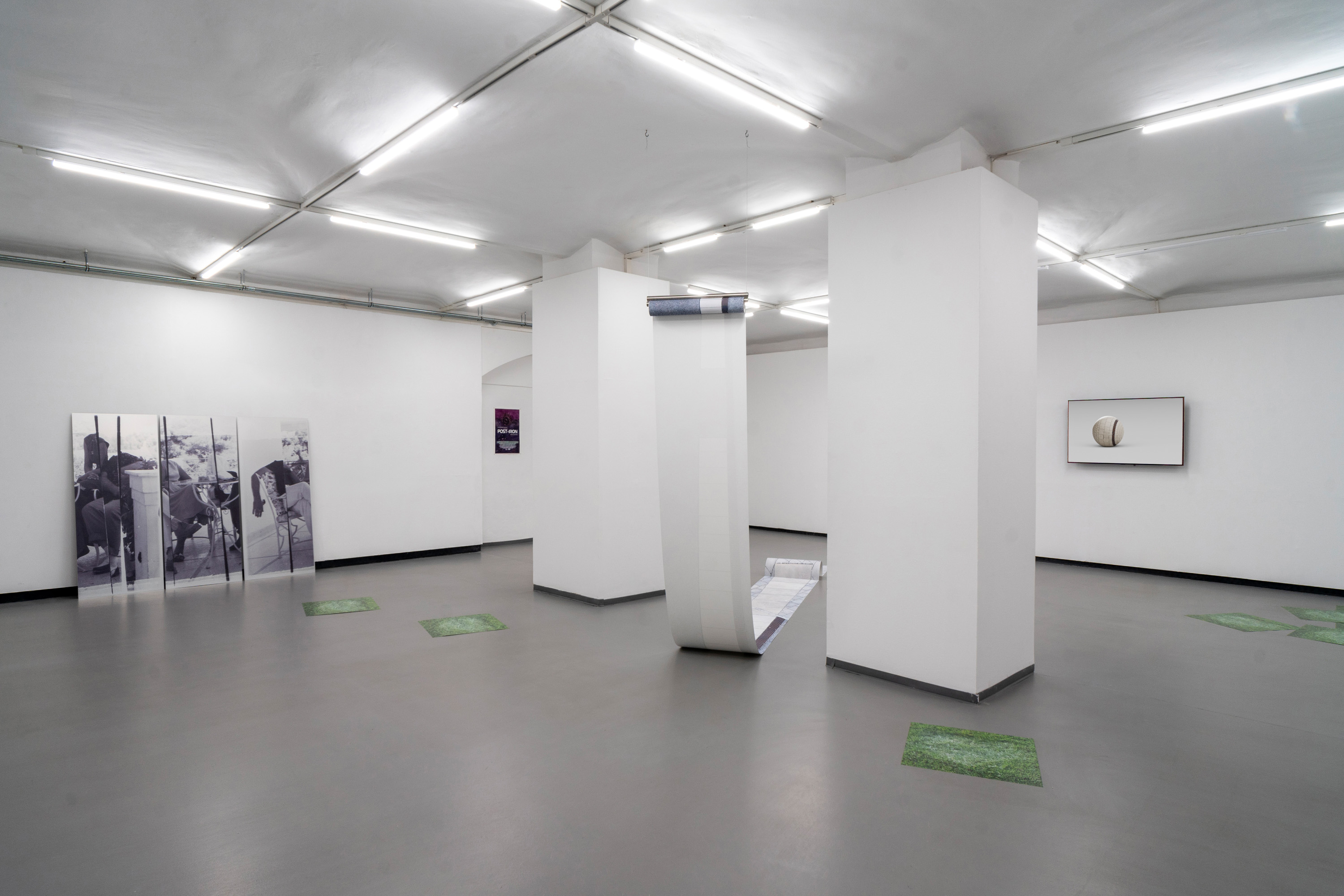
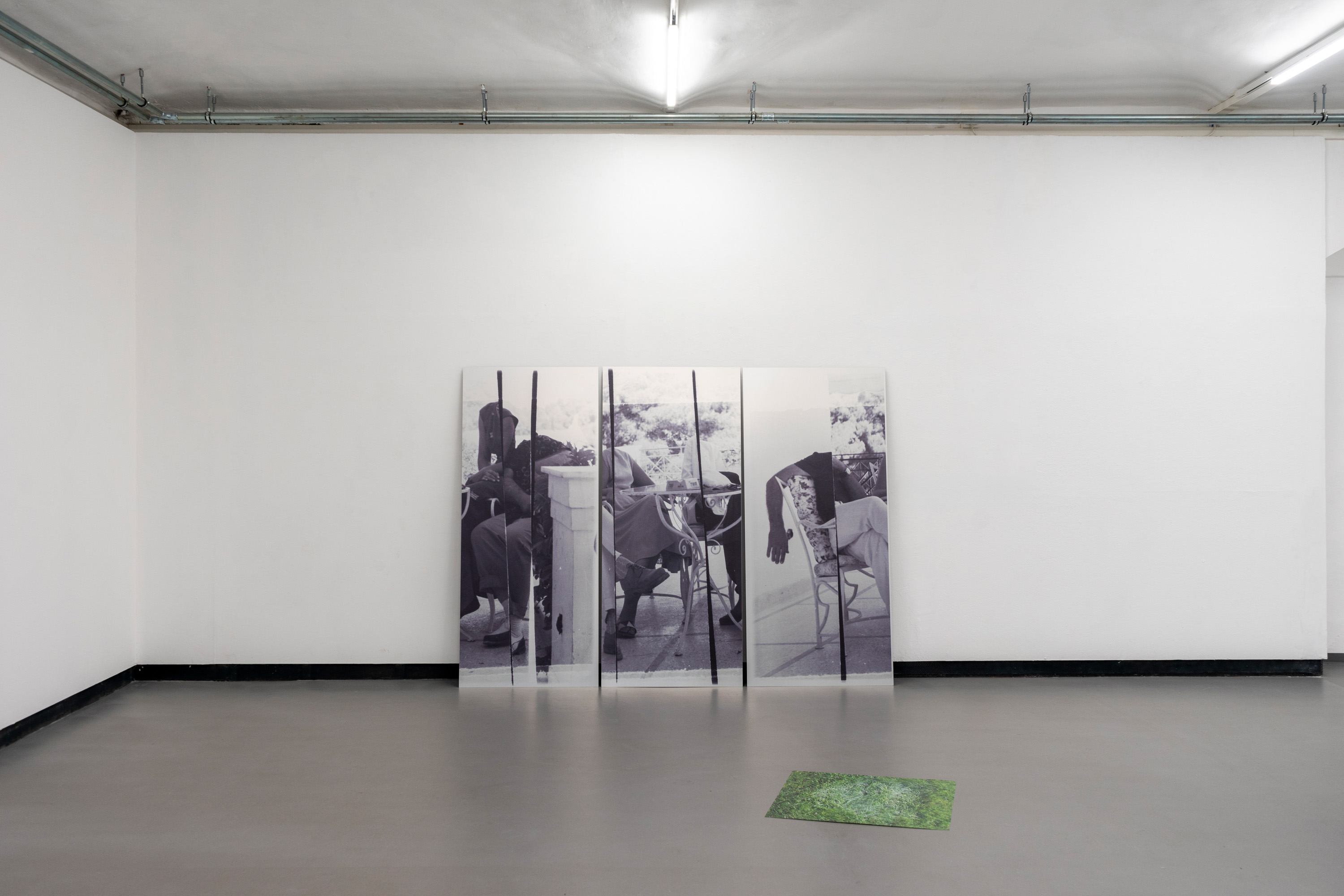
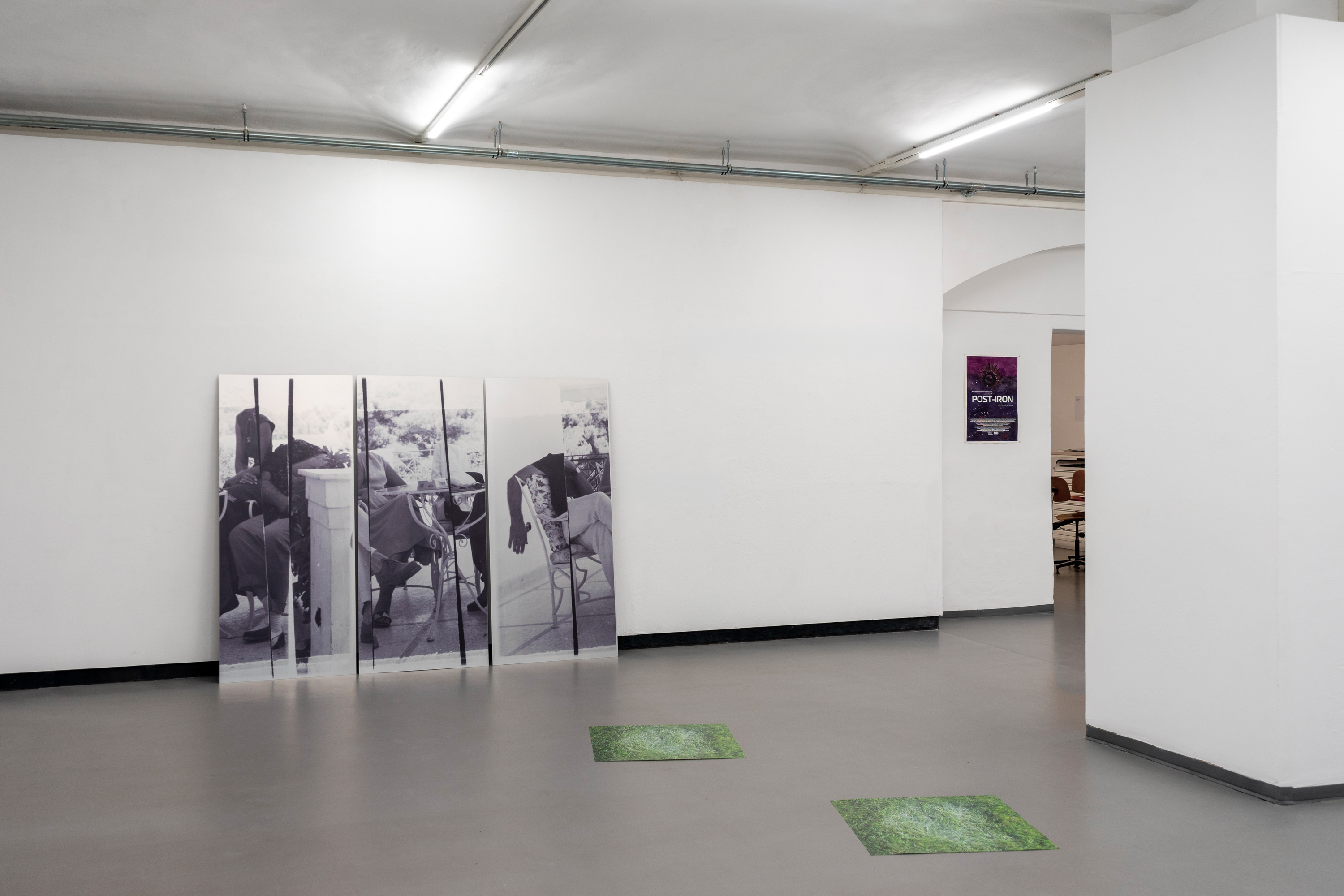
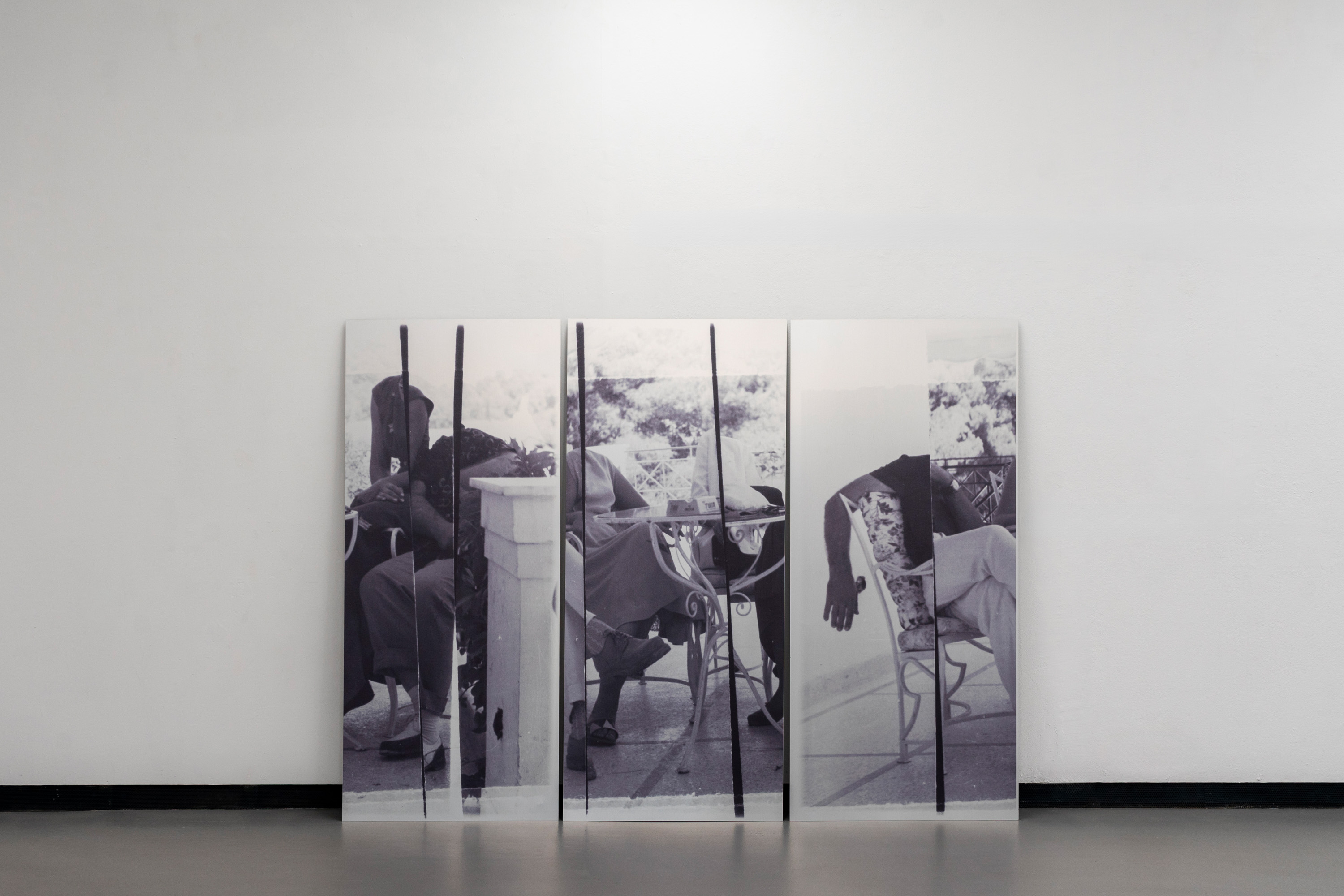
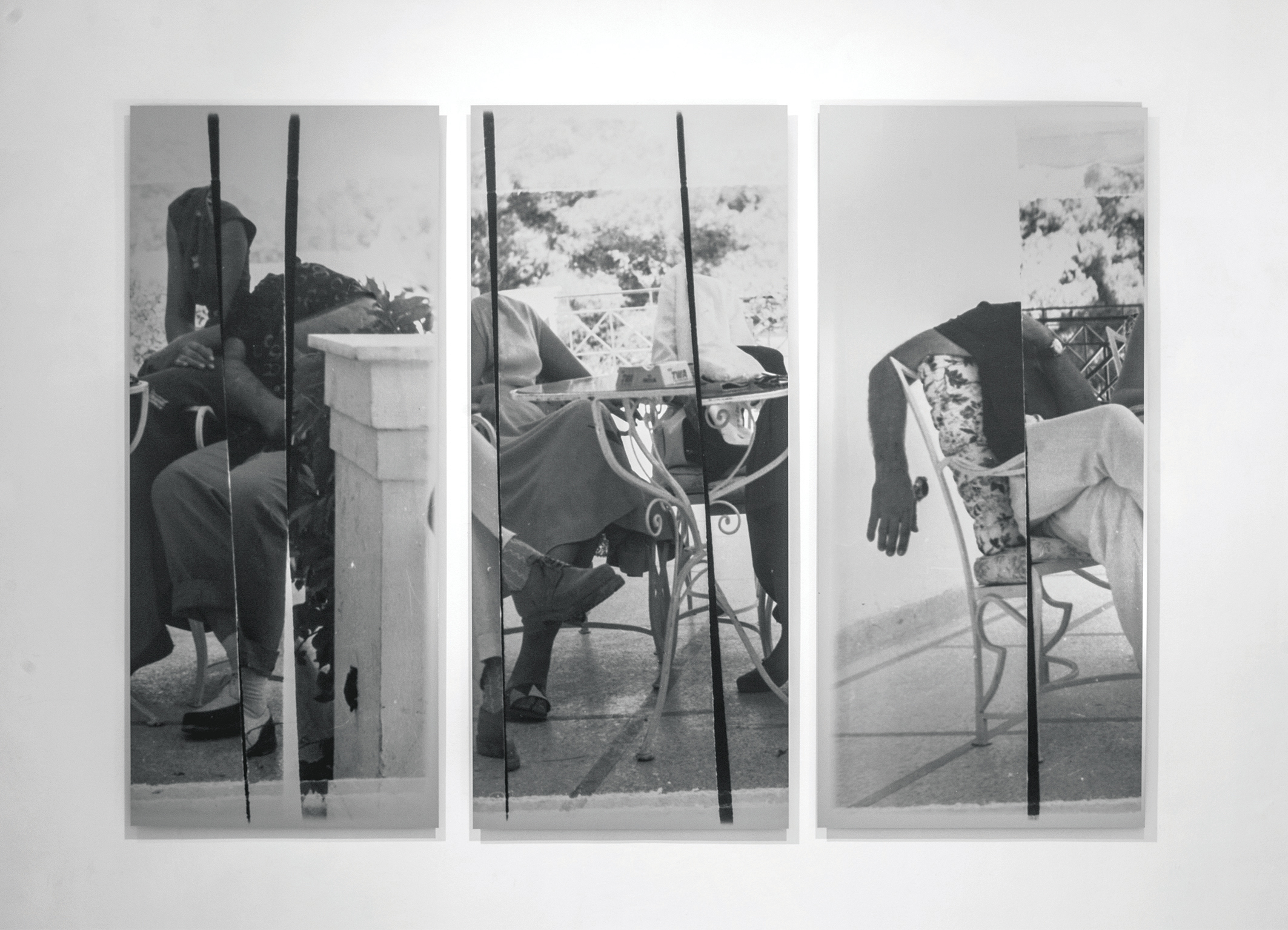
Ilias Sipsas presents the large-format triptych Familia Santa, a décollage of a black-and-white photographic negative from a found archive. Through processes of cutting, shifting, and reassembling, an everyday scene is fragmented. These interventions disrupt the temporal continuity of the captured moment, generating a spatial and irreversible displacement in which gestures, bodies, and fragments hover between appearance and disappearance. Situated between photography and sculptural construction, the triptych reflects an ongoing investigation of the analog image as a site of transformation. By treating found photographs as raw material rather than as documentary evidence, the work proposes a new dimensional condition in which fragmentation, scale, and spatial perception reconfigure how photographic images occupy space.
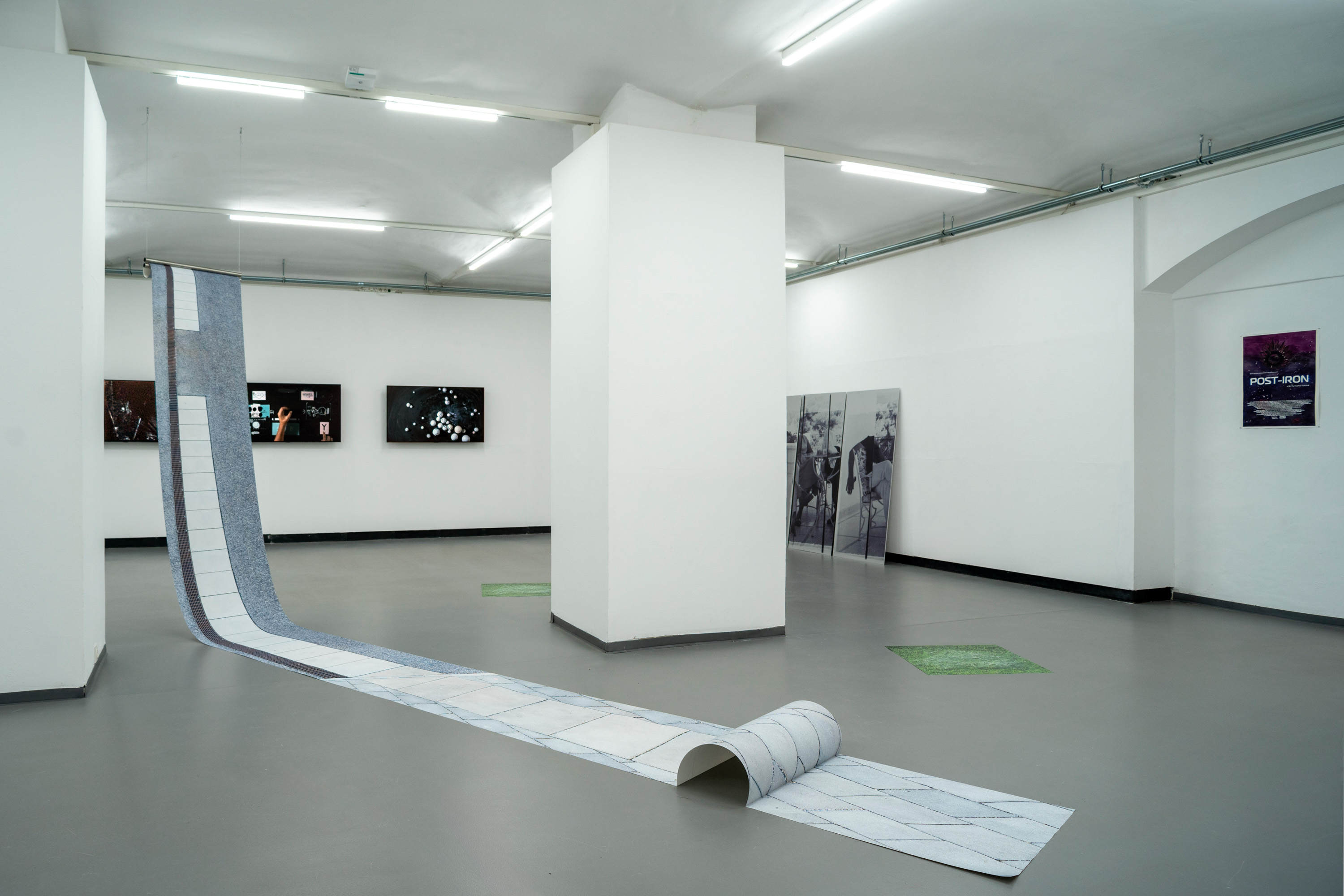
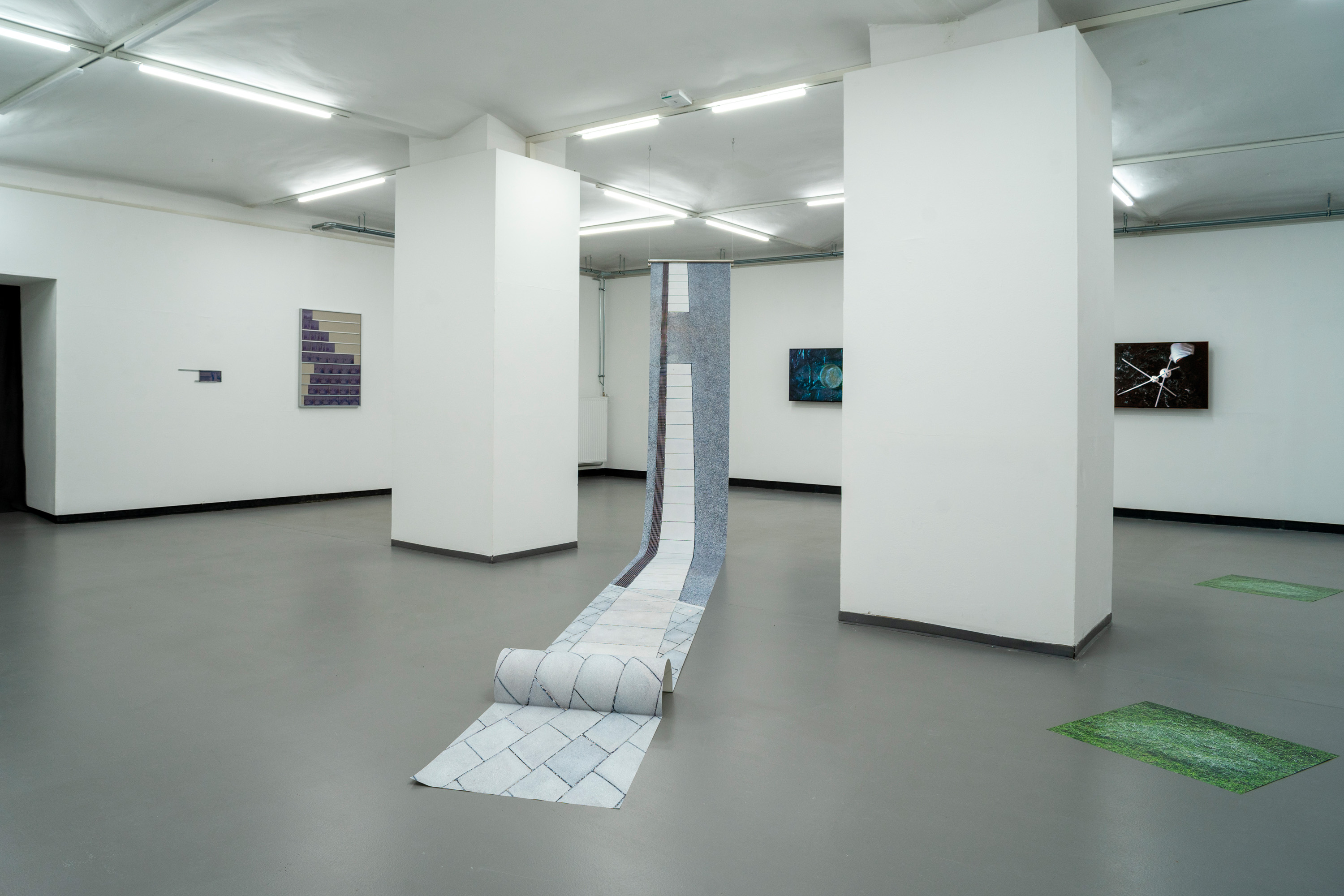
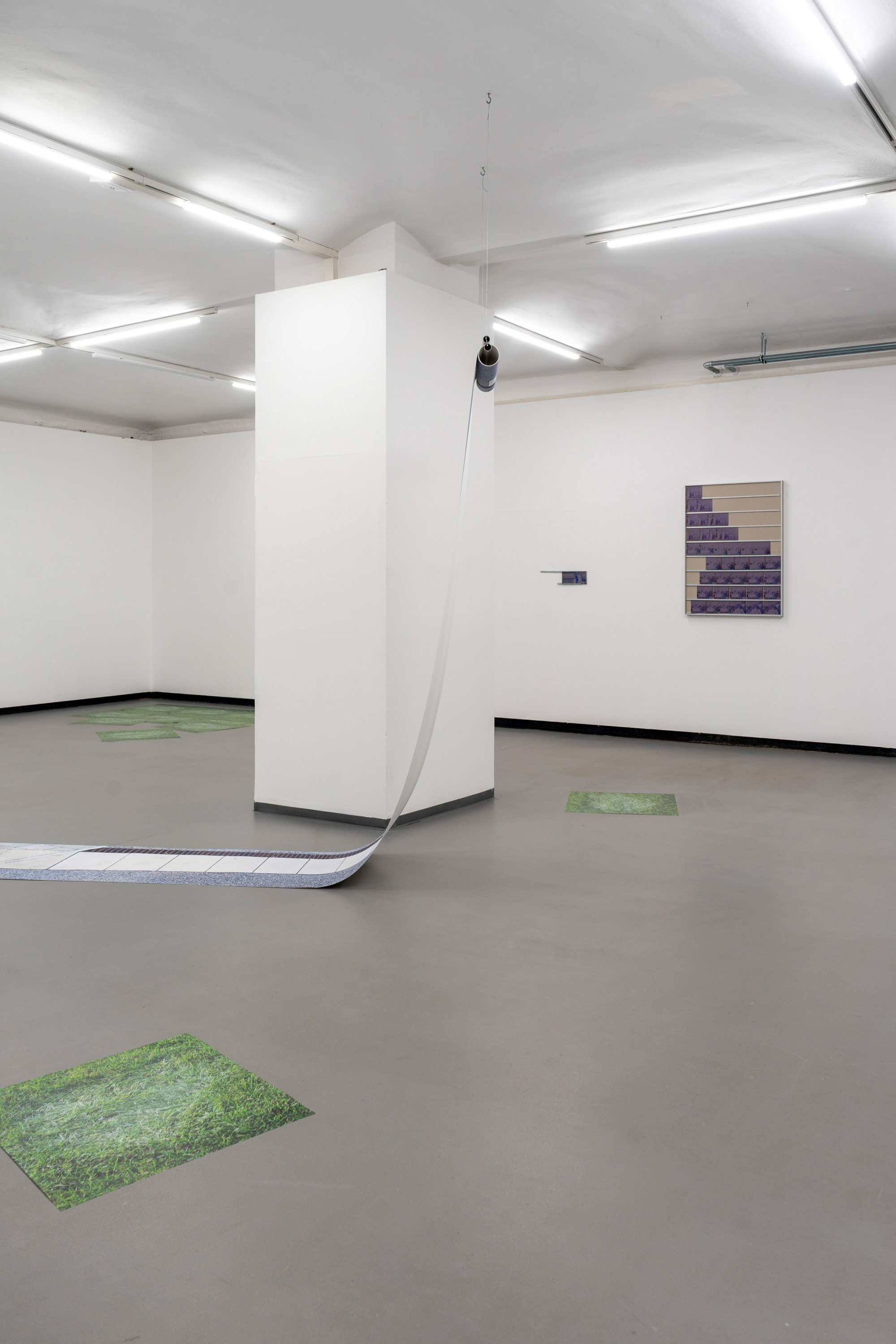
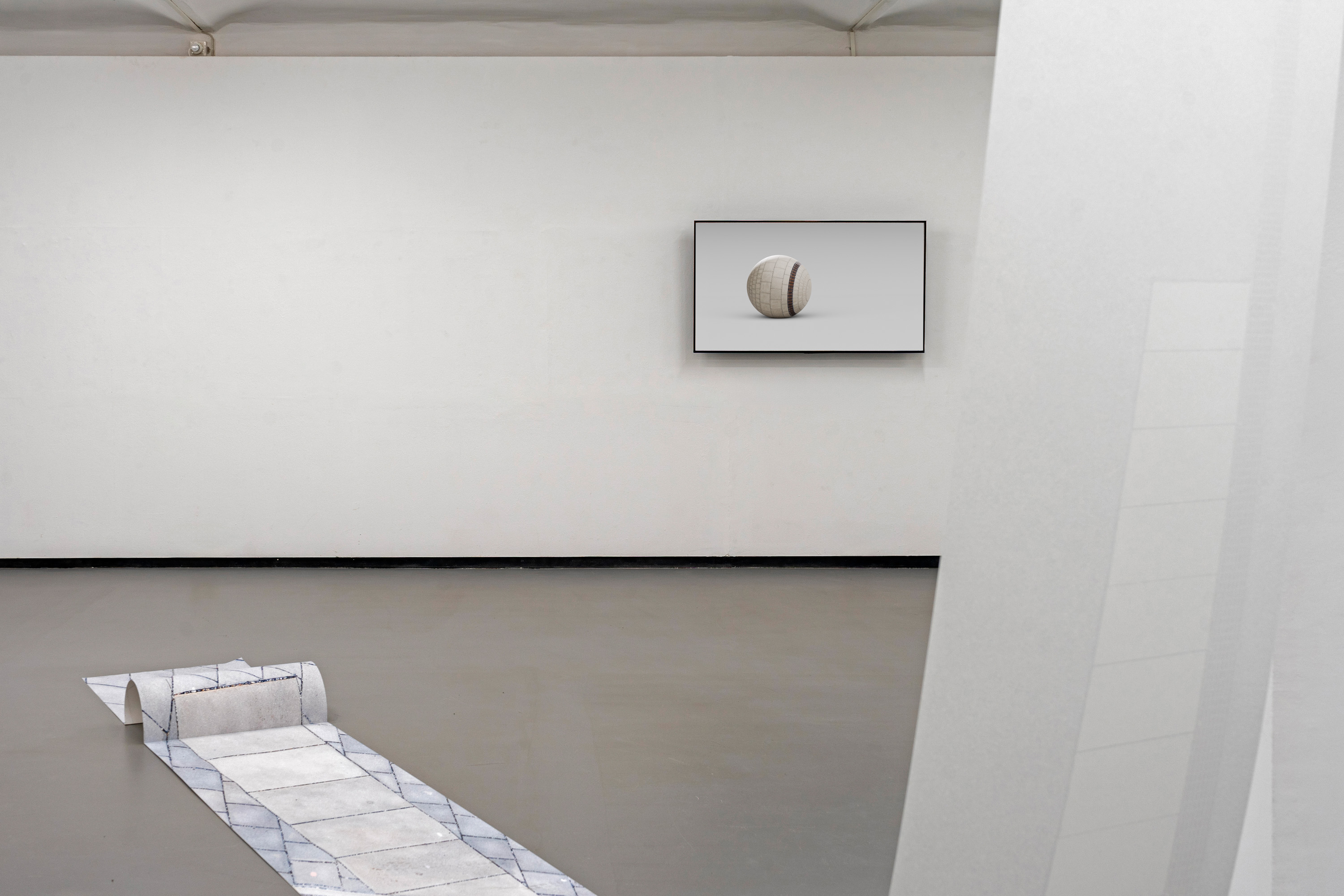
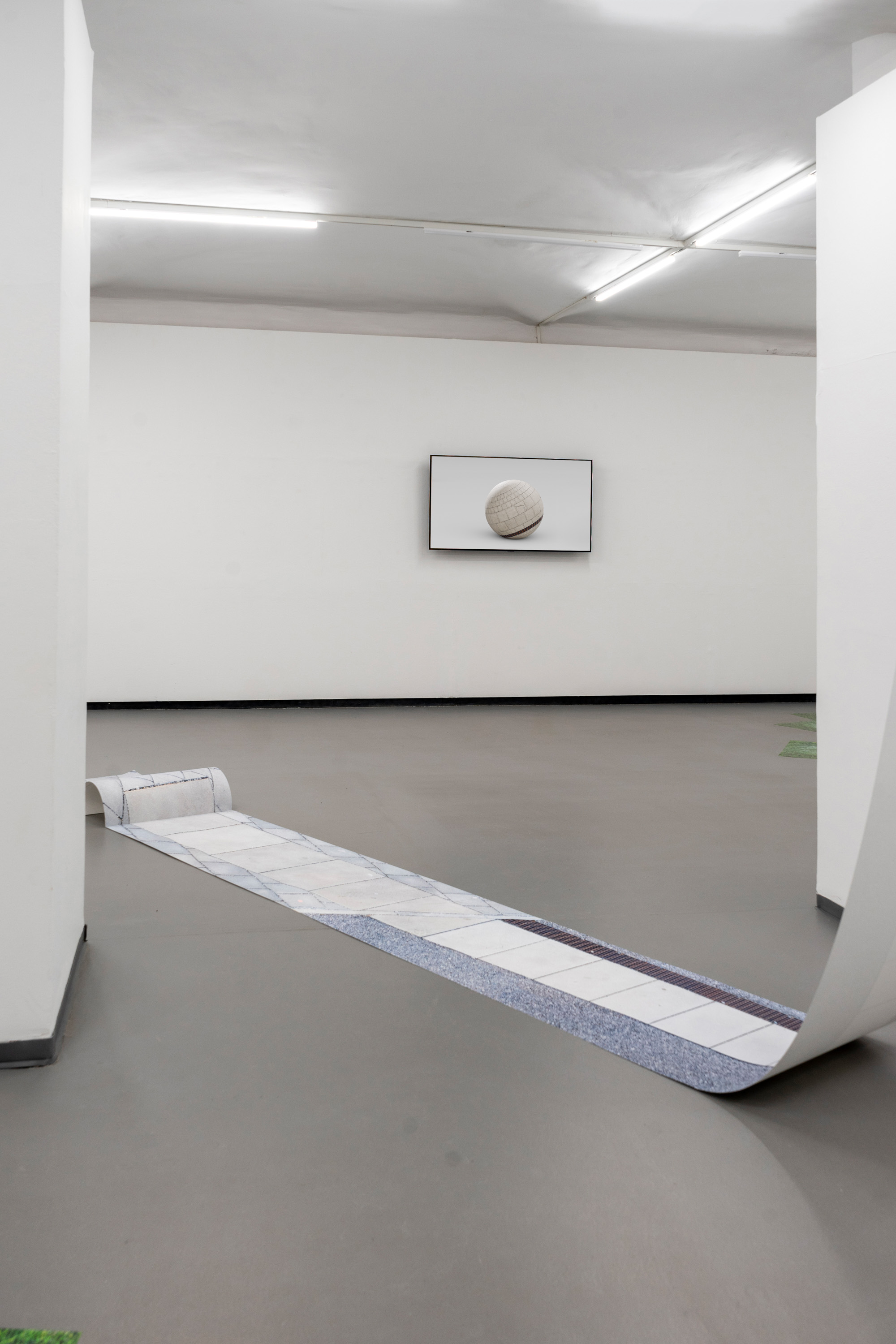
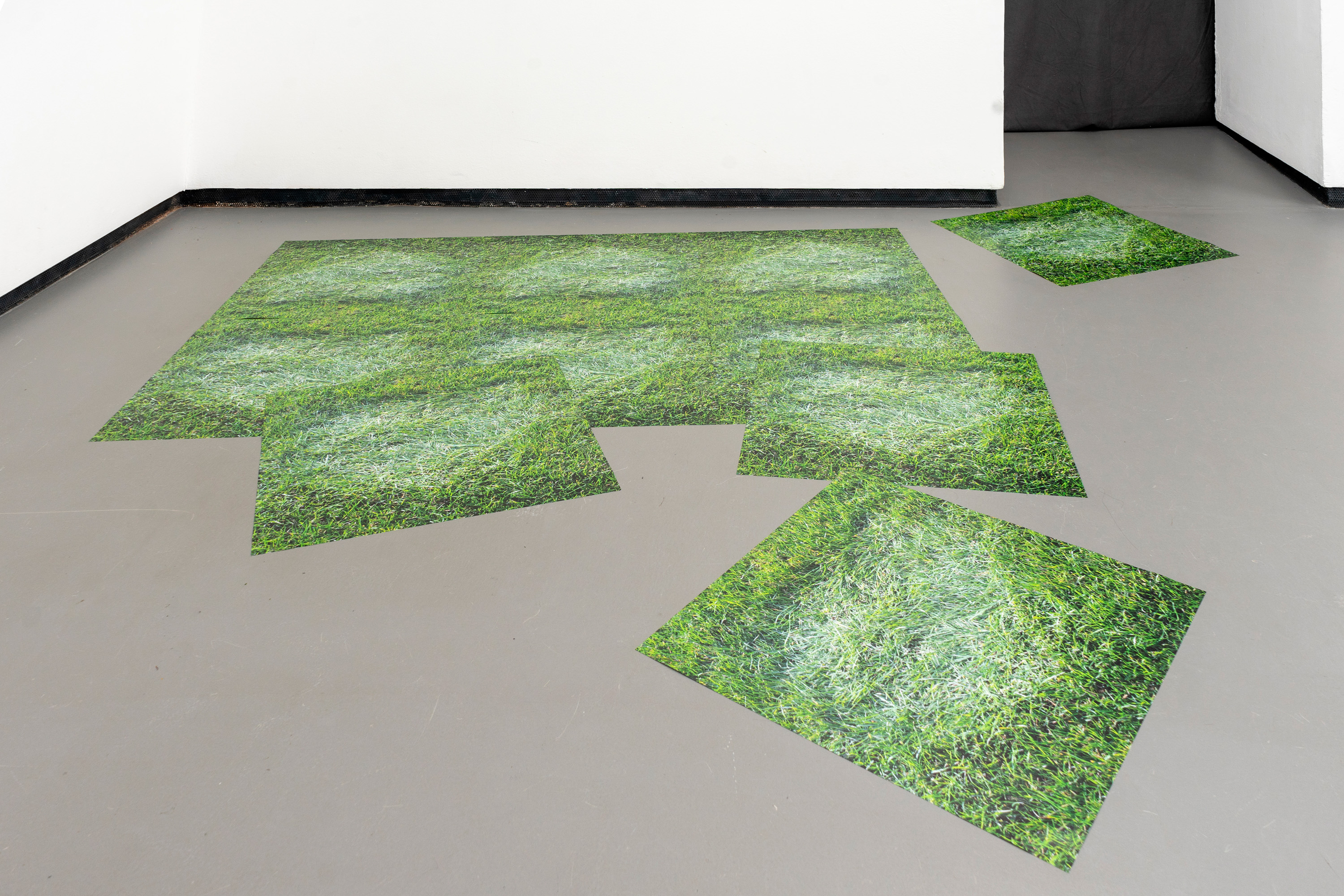
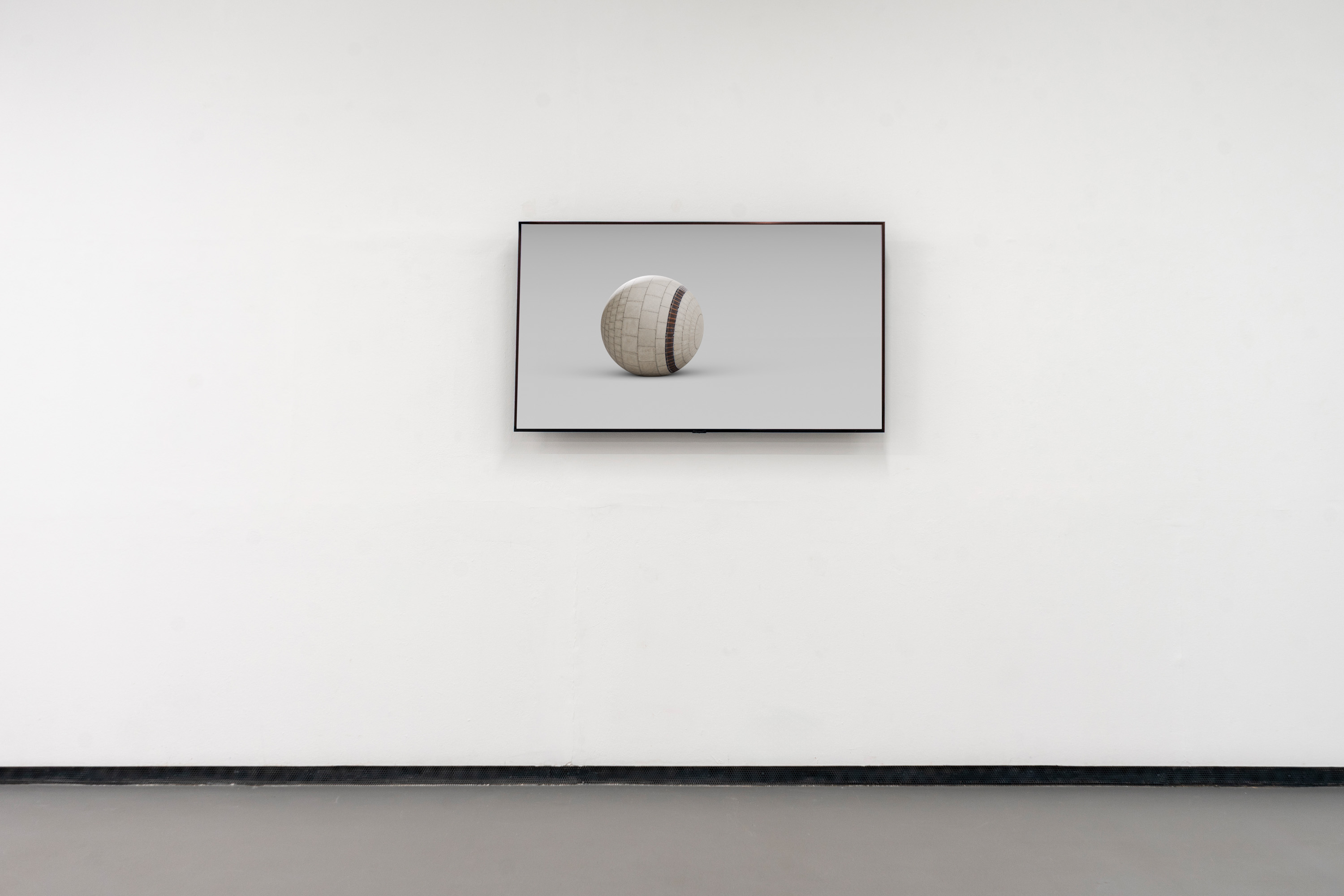
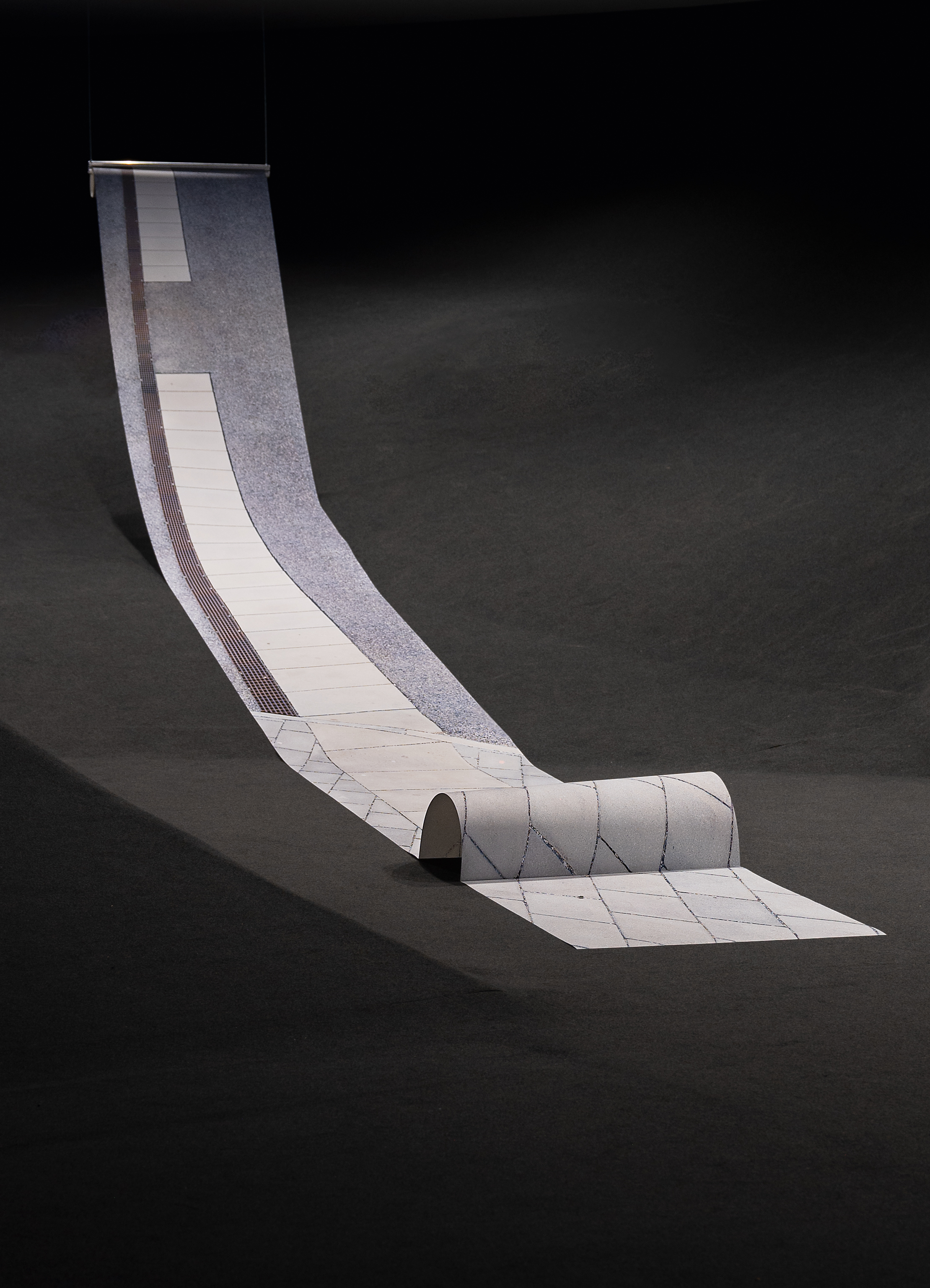
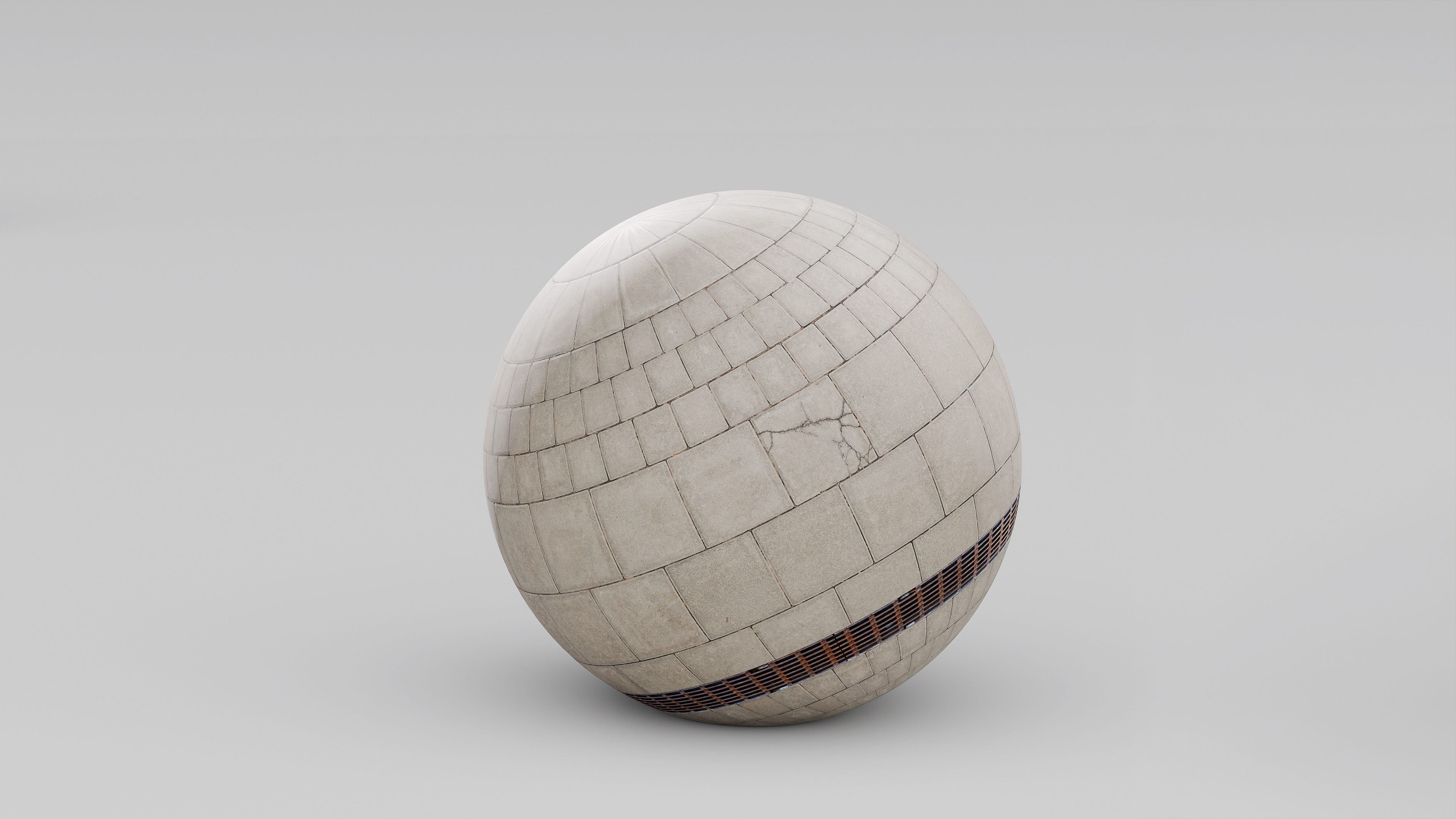
Simona Obholzer’s multi-part installation critically reflects on the standardized design of urban spaces. untitled (ground) depicts a paved urban surface imprinted on a seven-meter-long roll of paper. At its end, the paper curls upward, as if the ground itself were withdrawing or reforming. At the same time, the work draws attention to the endlessly reproducible and ecologically problematic nature of installing such surfaces. The 3D video animation Park explores the interrelations between analog and virtual spaces. Today, physical environments are often first conceived digitally—for example, as renderings. Digital aesthetics and material appearance are mutually interdependent: in the virtual realm, textures establish a connection to the haptically perceptible world, whereas built environments increasingly adopt the smooth surfaces of digital image spaces. The video shows animated spheres rolling through an empty, undefined environment; their surfaces feature materials used in the design of urban open spaces. In Park, textures marked by minimal inconsistencies—in the sense of a glitch—subvert the logic of endless repetition. Obholzer prompts reflection on the role of physicality in an increasingly digital world, an idea that gains another dimension in the square photograph of a patch of grass bearing a human imprint, my own private green.
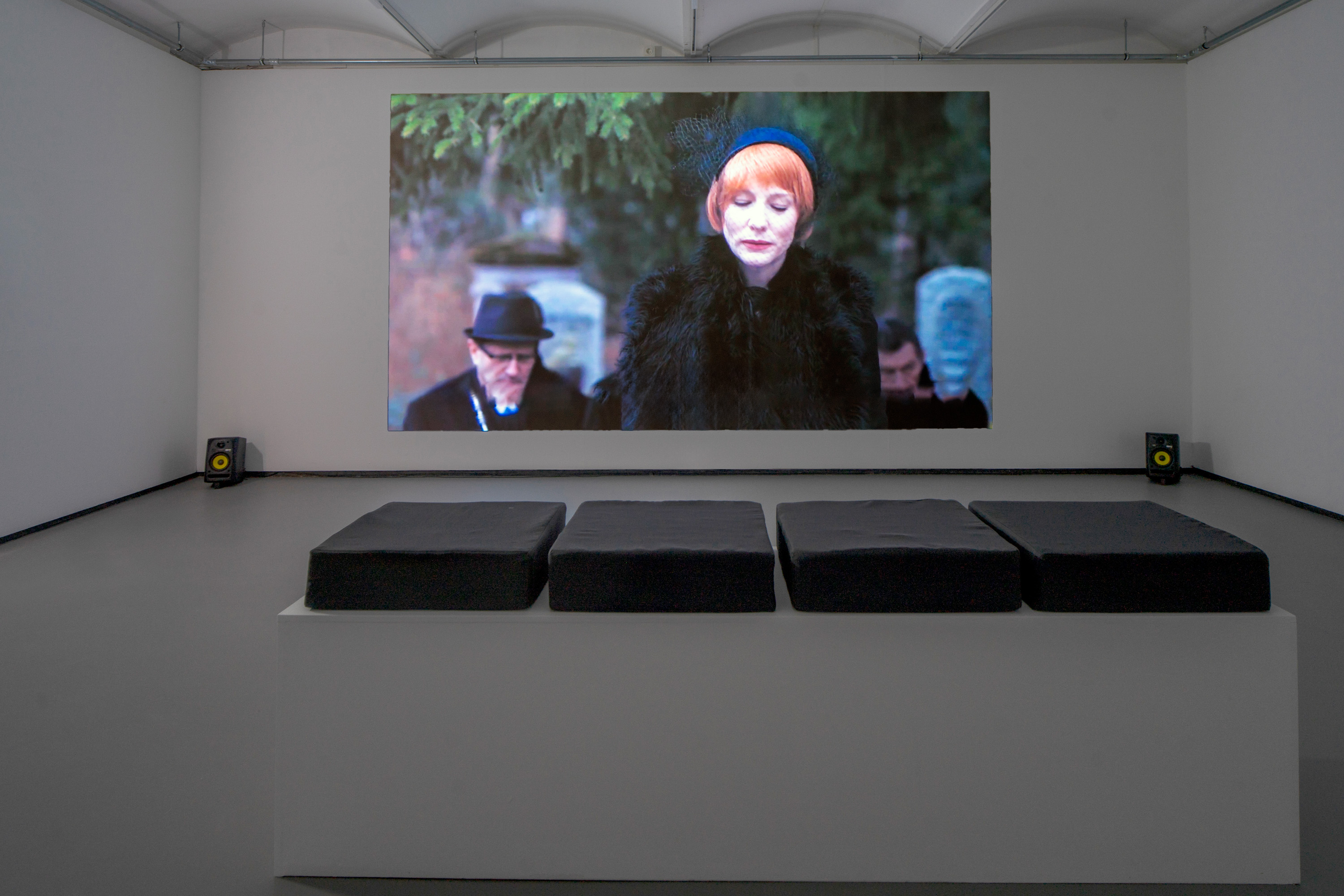
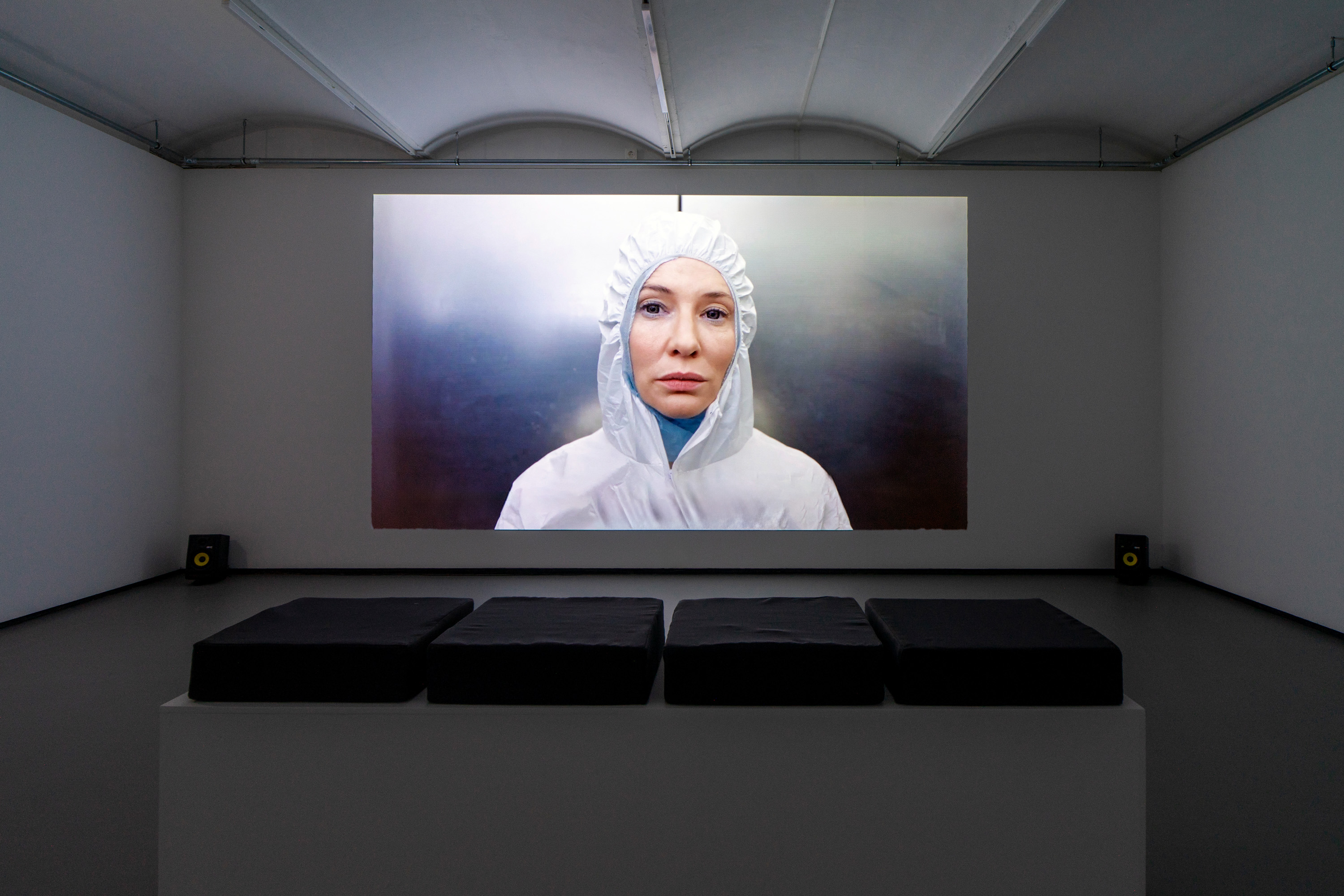
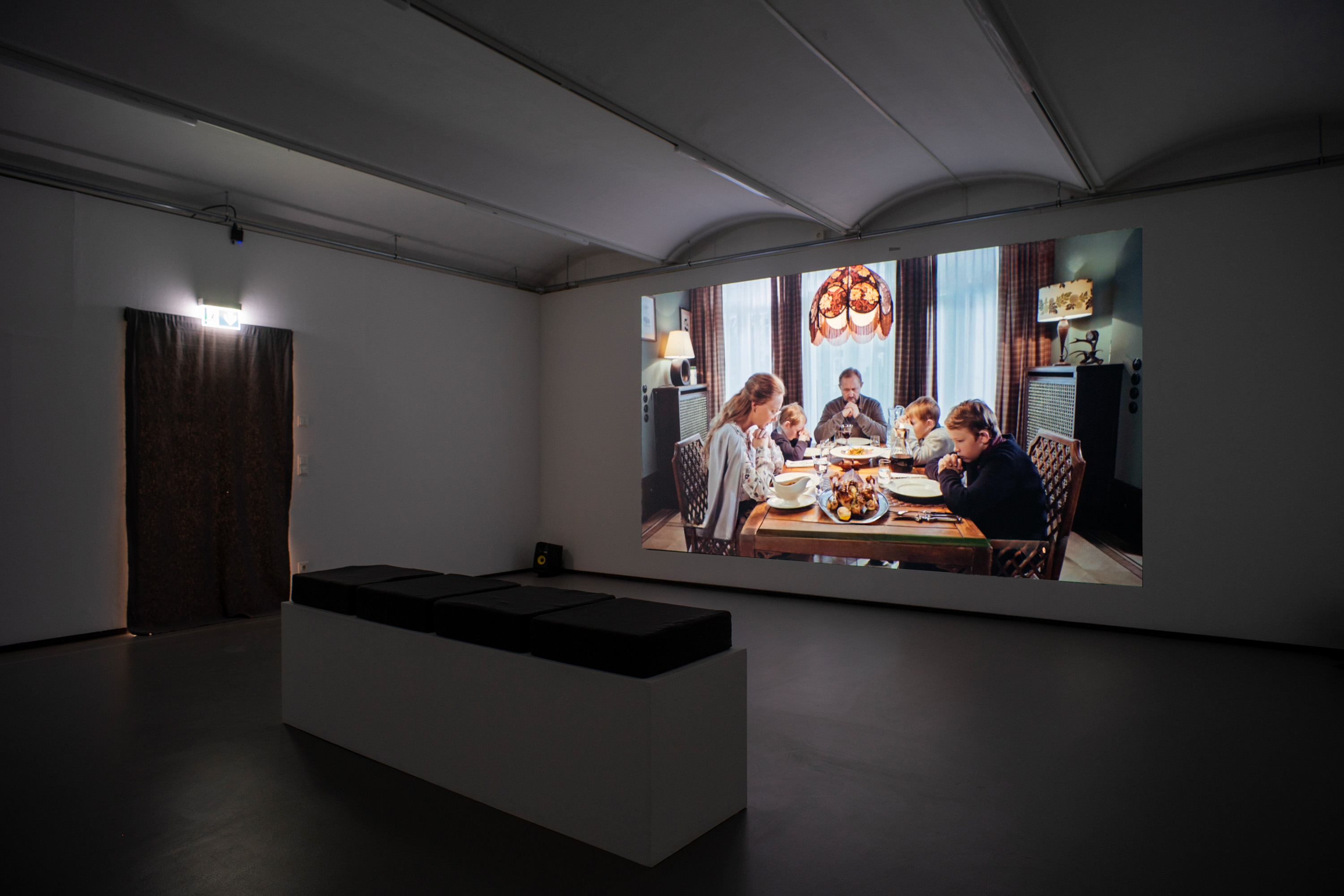
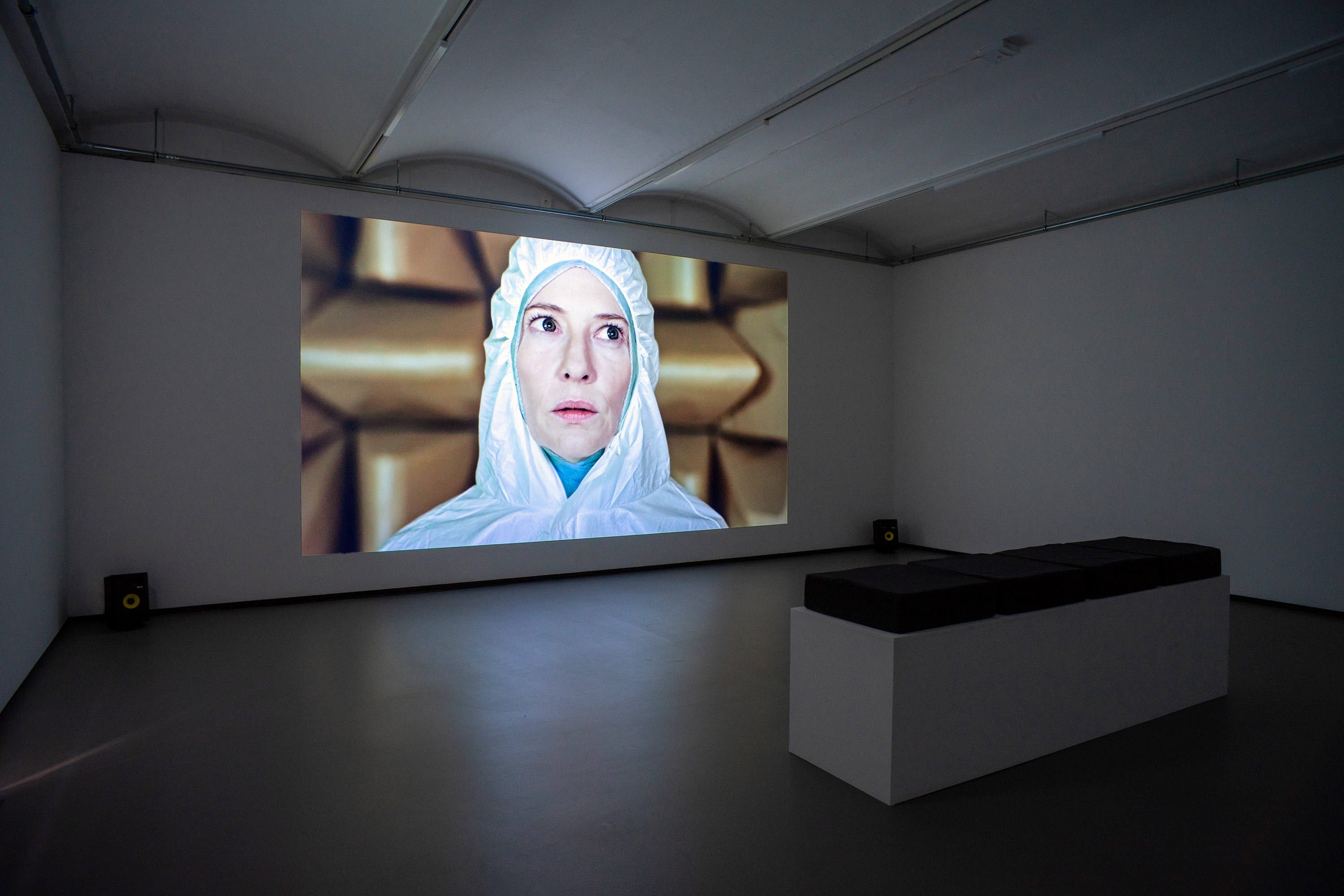
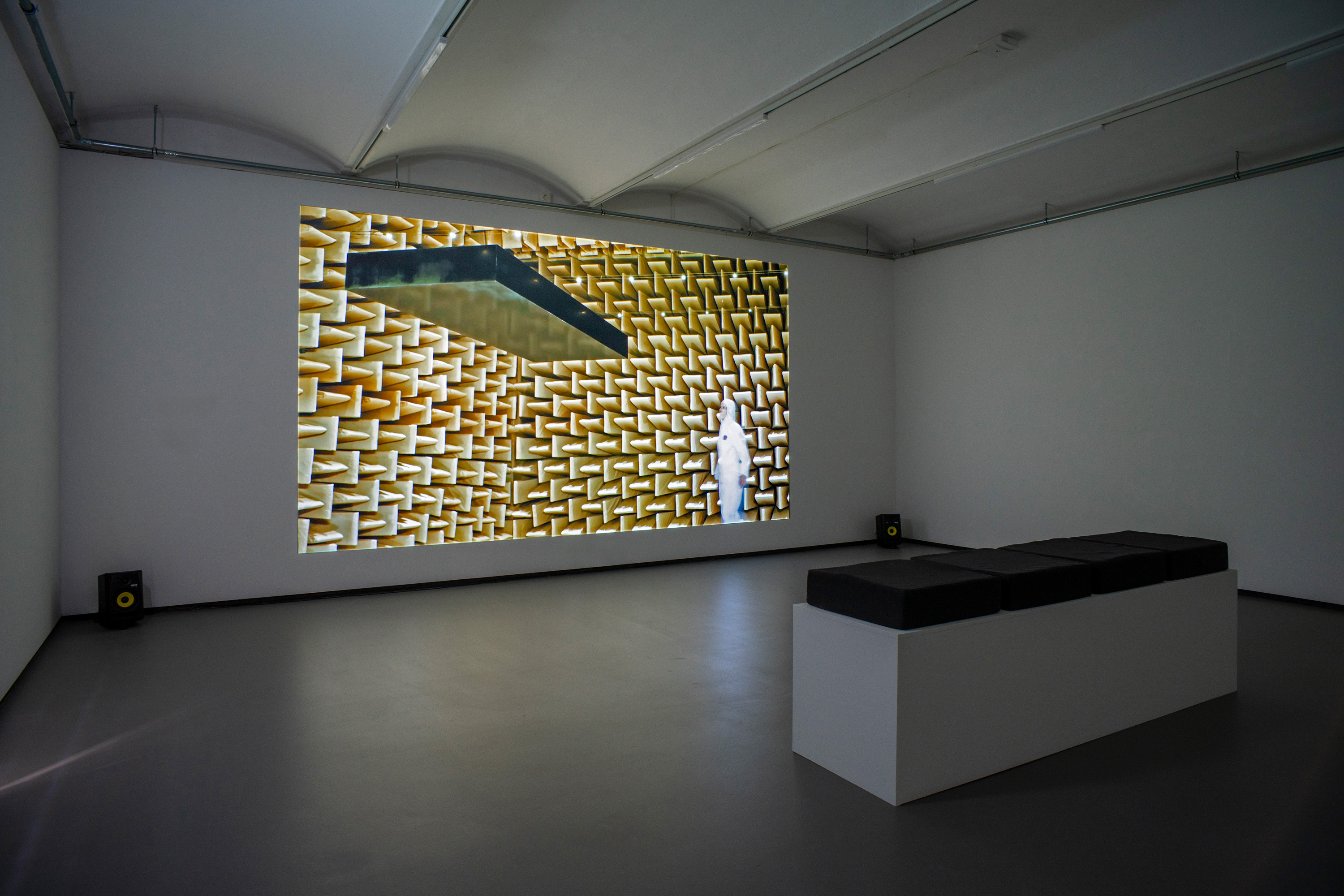
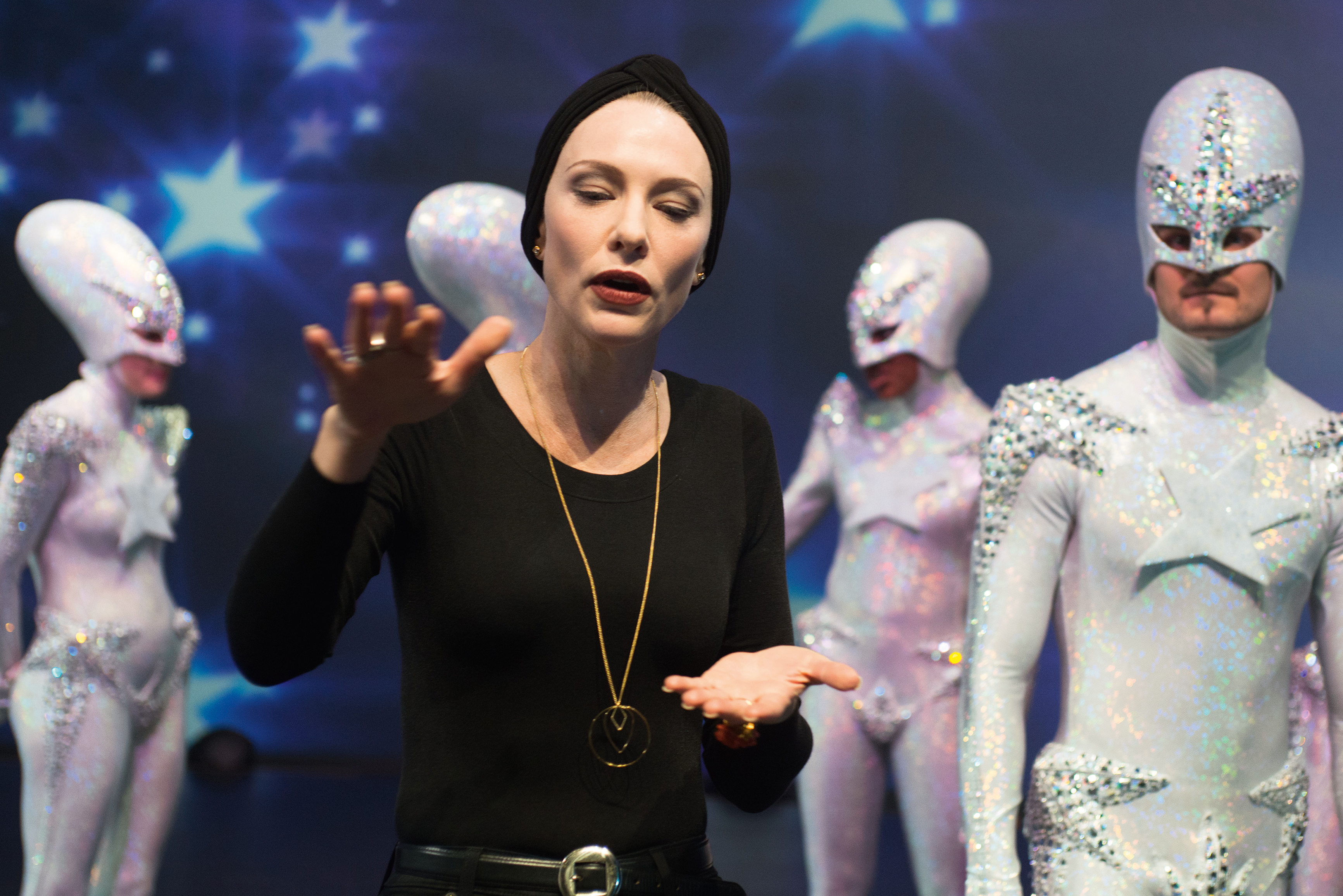
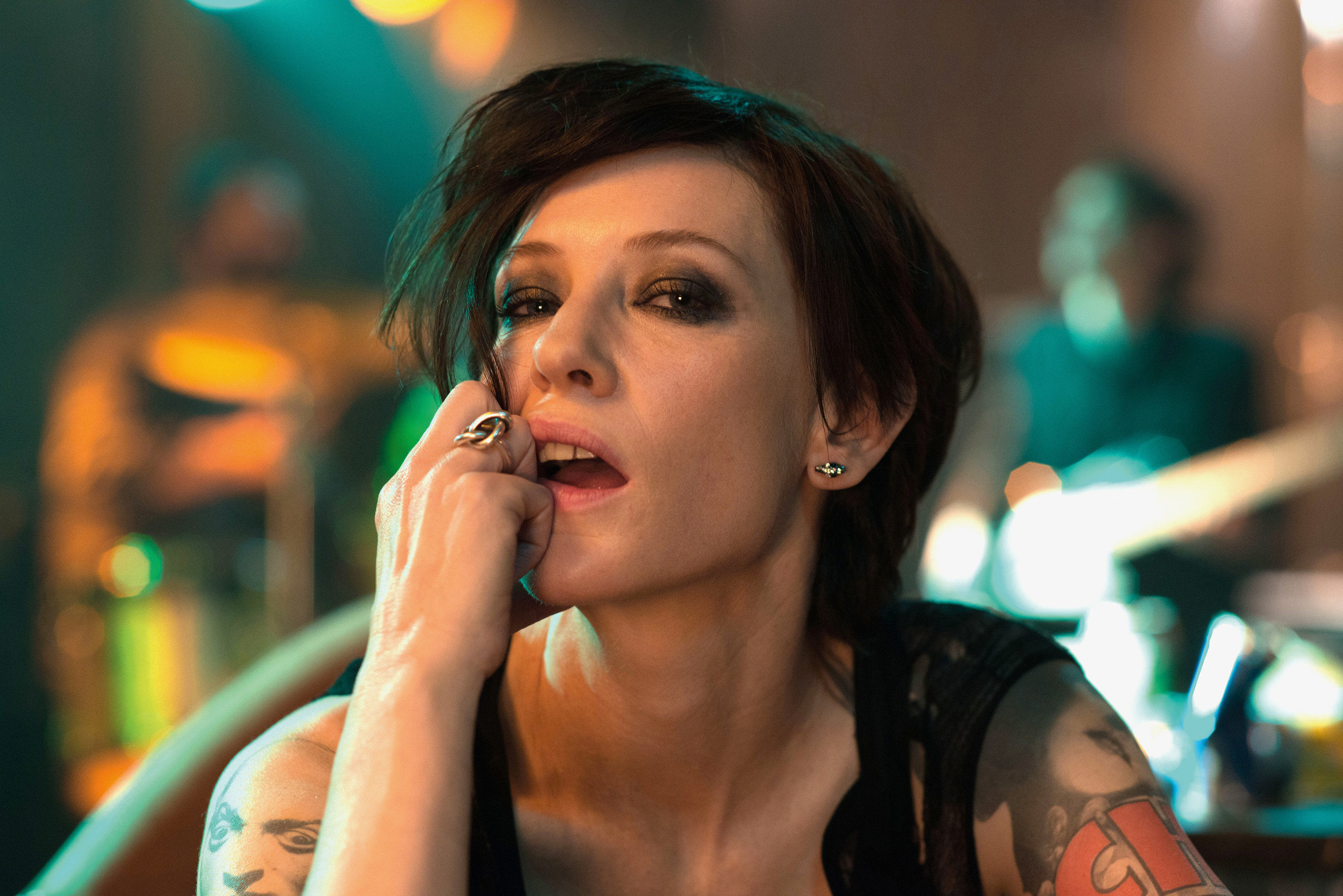
Julian Rosefeldt’s thirteen-channel film installation Manifesto (2015) pays homage to the vibrant tradition and literary beauty of artists’ manifestos, while ultimately questioning the role of artists in contemporary society. Manifesto draws on the writings from Futurists, Dadaists, Fluxus artists, Suprematists, Situationists, Dogme 95, and other artistic movements, as well as reflections from individual artists, architects, dancers, and filmmakers. By truncating, condensing, and combining original texts from these manifestos into thirteen spoken text collages, Rosefeldt gives voice to people working and living in diverse contemporary contexts. Cate Blanchett, with remarkably versatility, embodies thirteen distinct personas—including a teacher, a puppeteer, a news anchor, a factory worker, and a homeless person. Manifesto examines whether the statements and sentiments of these manifestos, written with passion and conviction, have endured over time, and whether the dynamics between politics, art, and life have shifted. Manifesto establishes connections between people, between past and present, and between art and life.
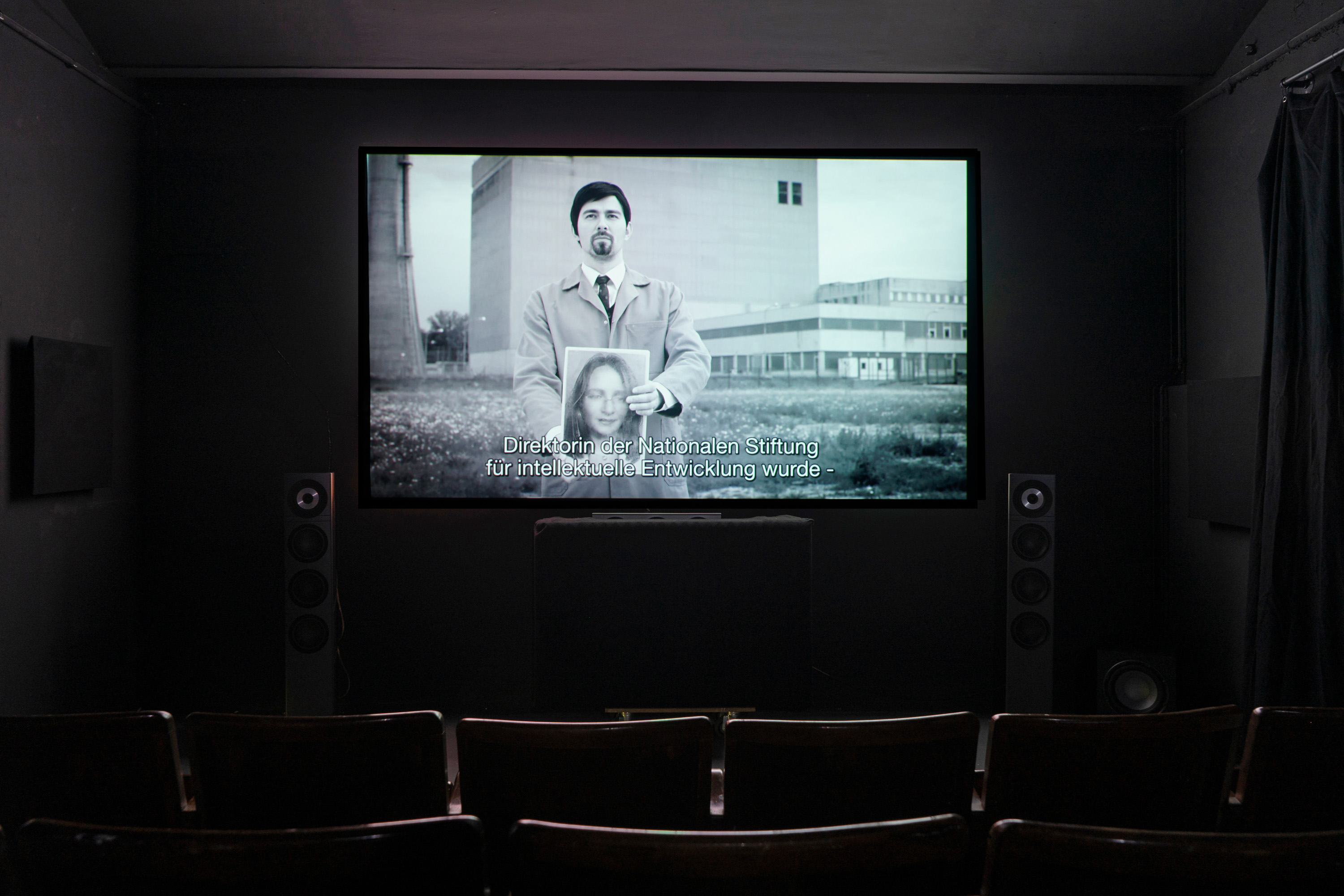
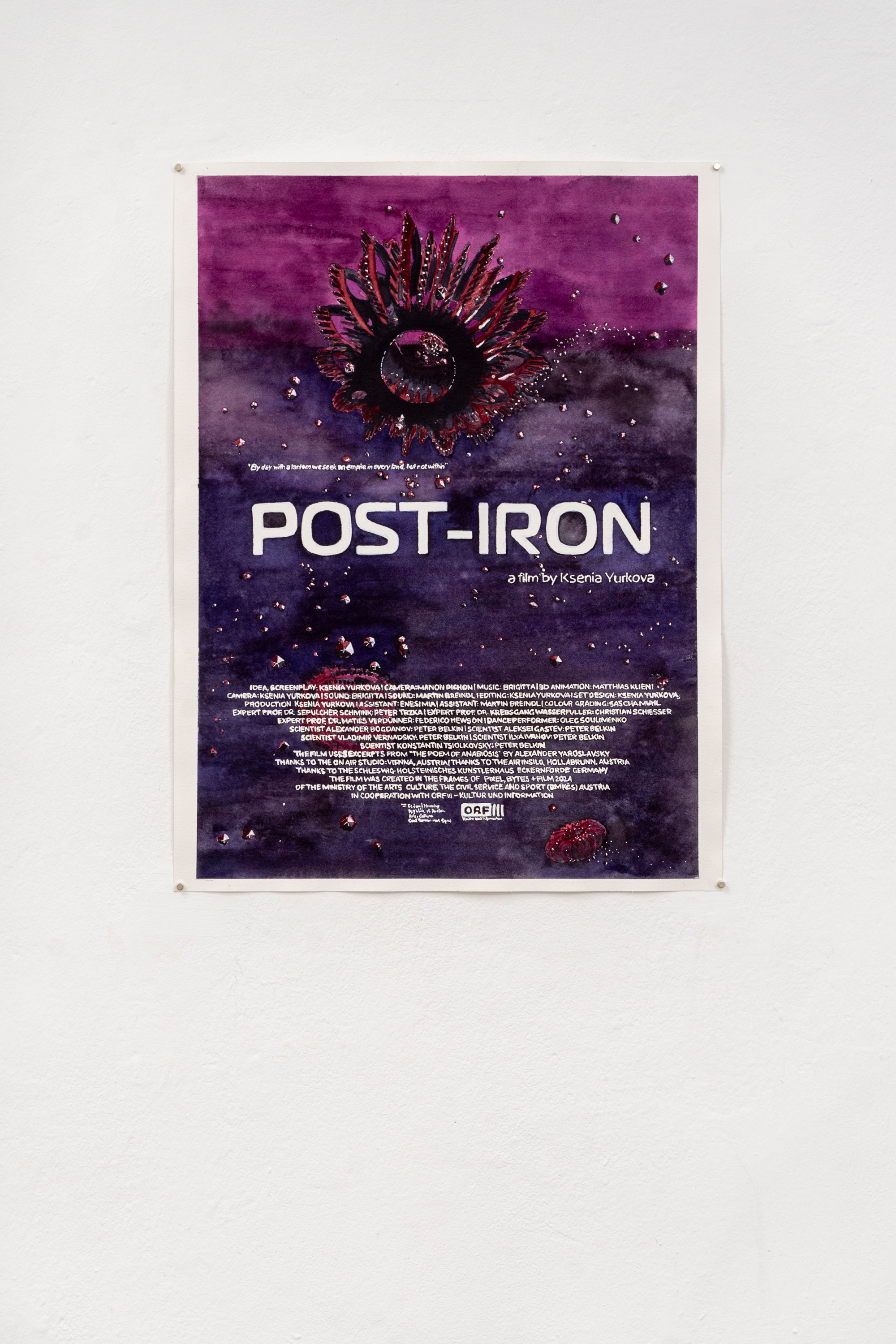
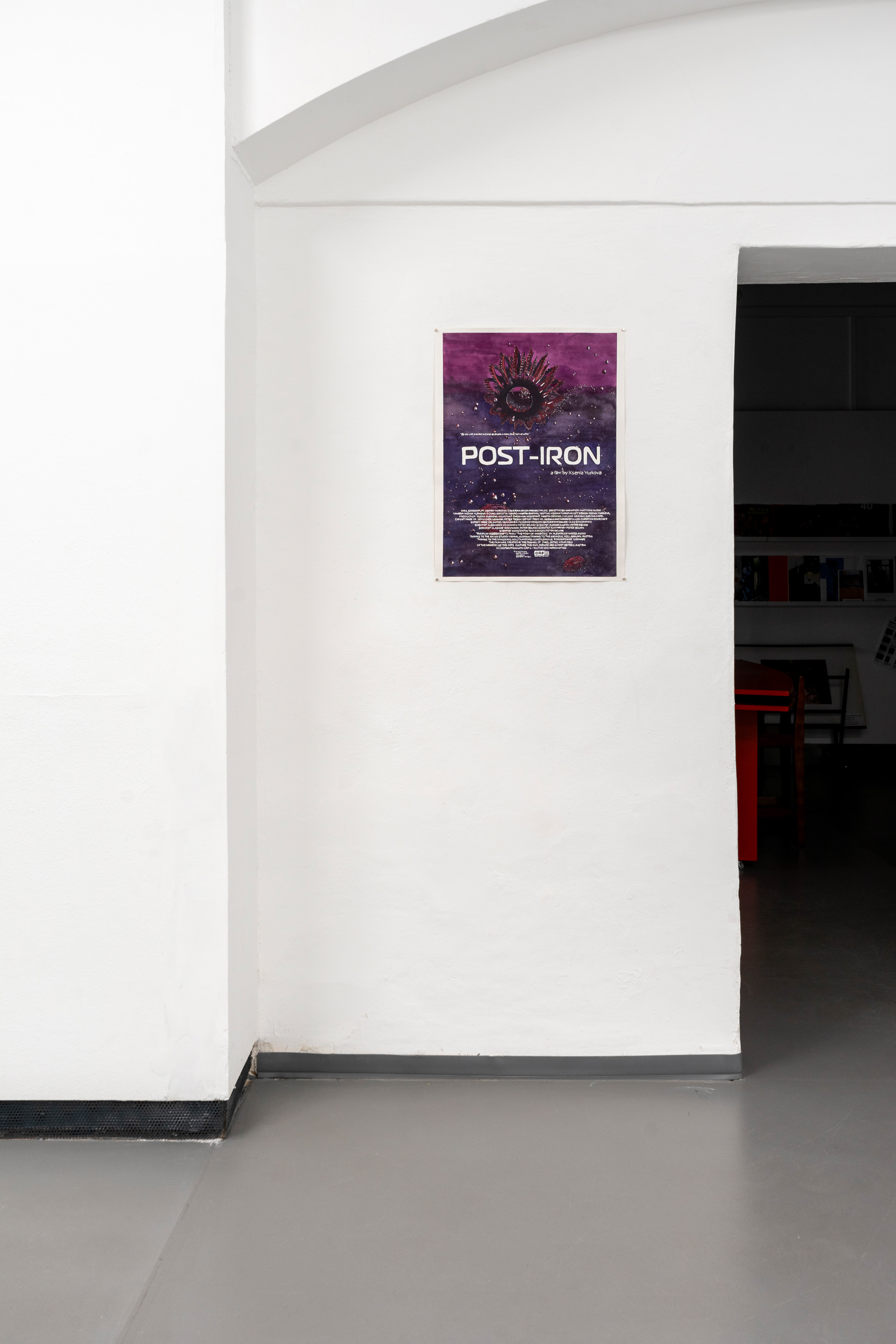
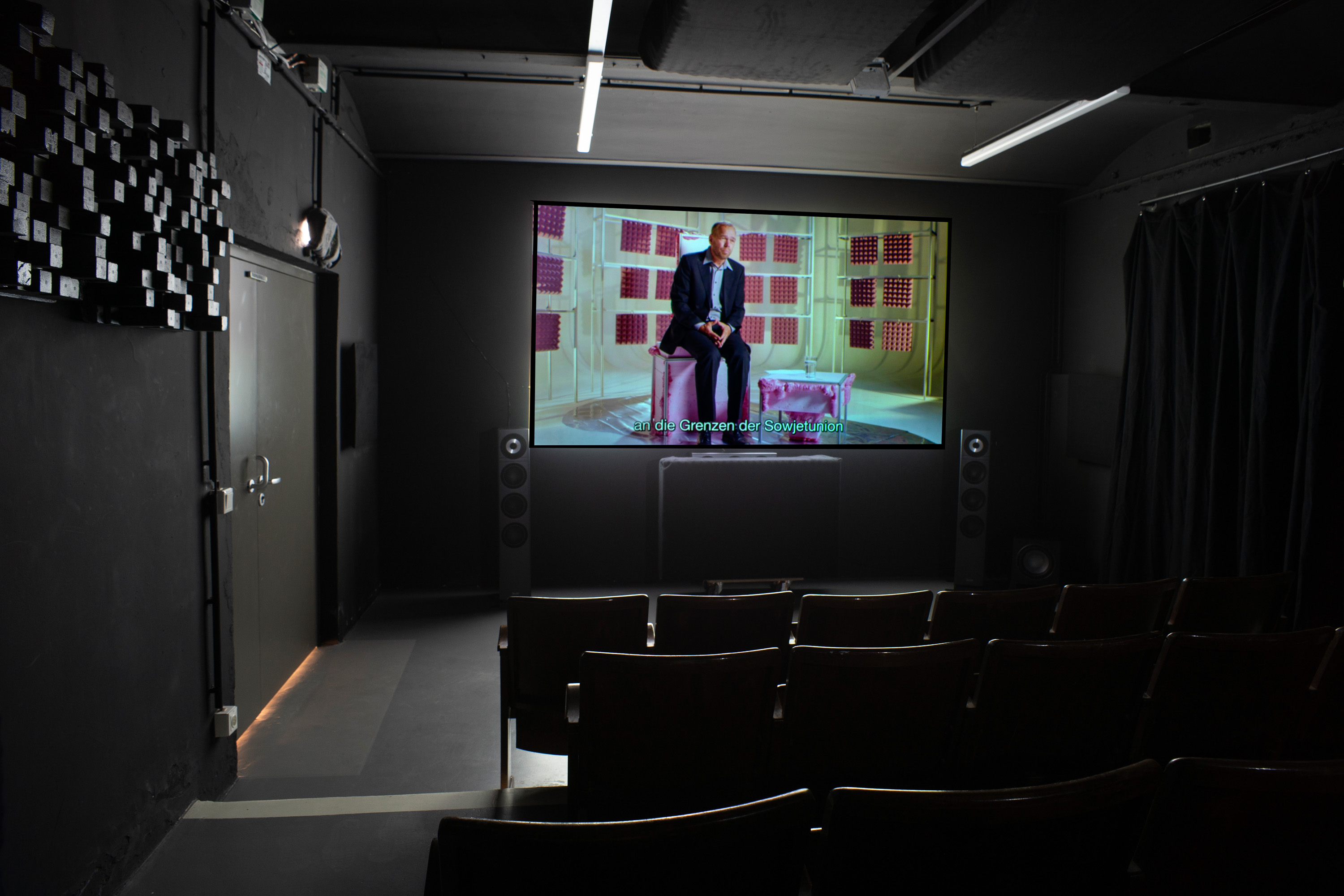
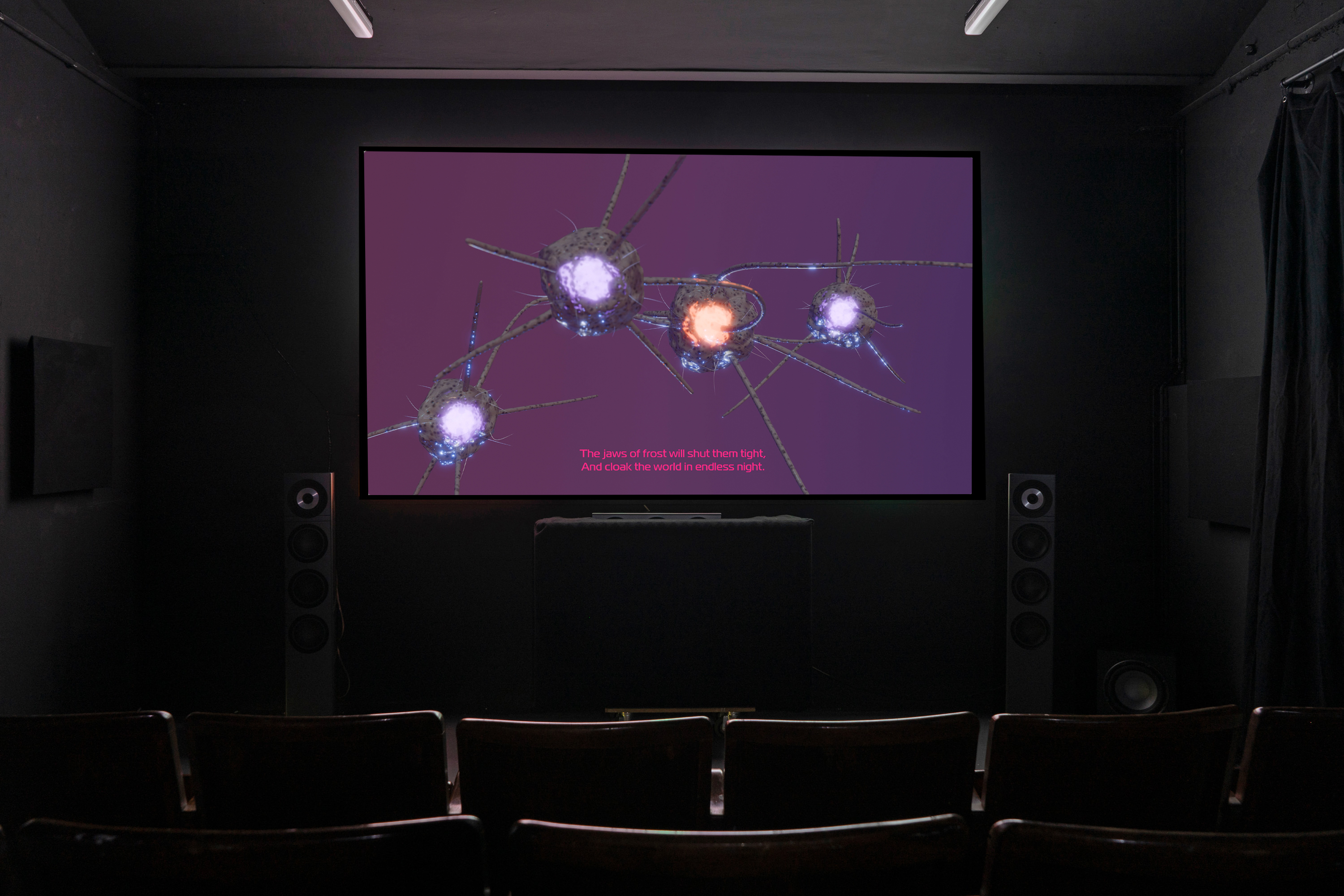
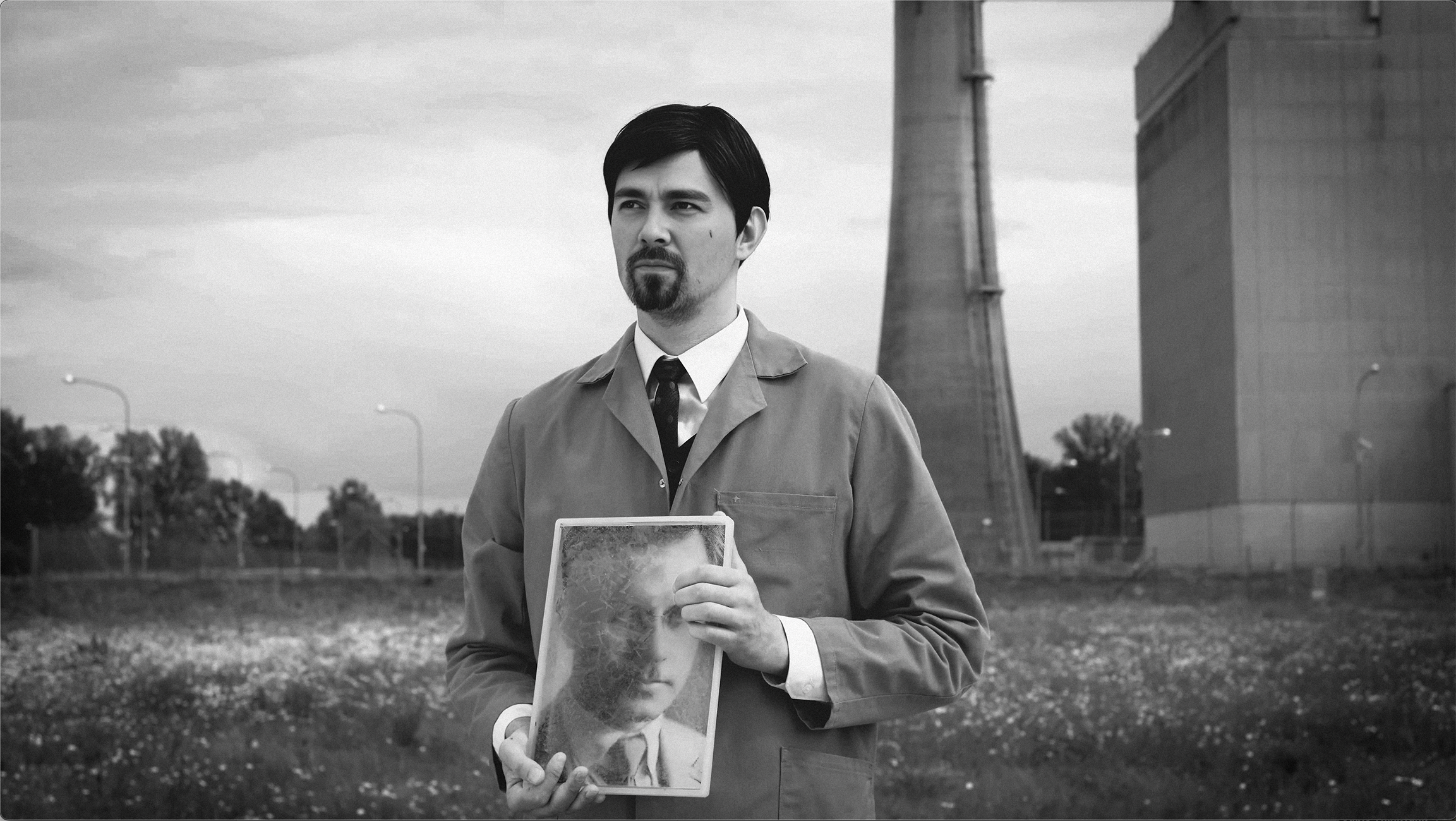
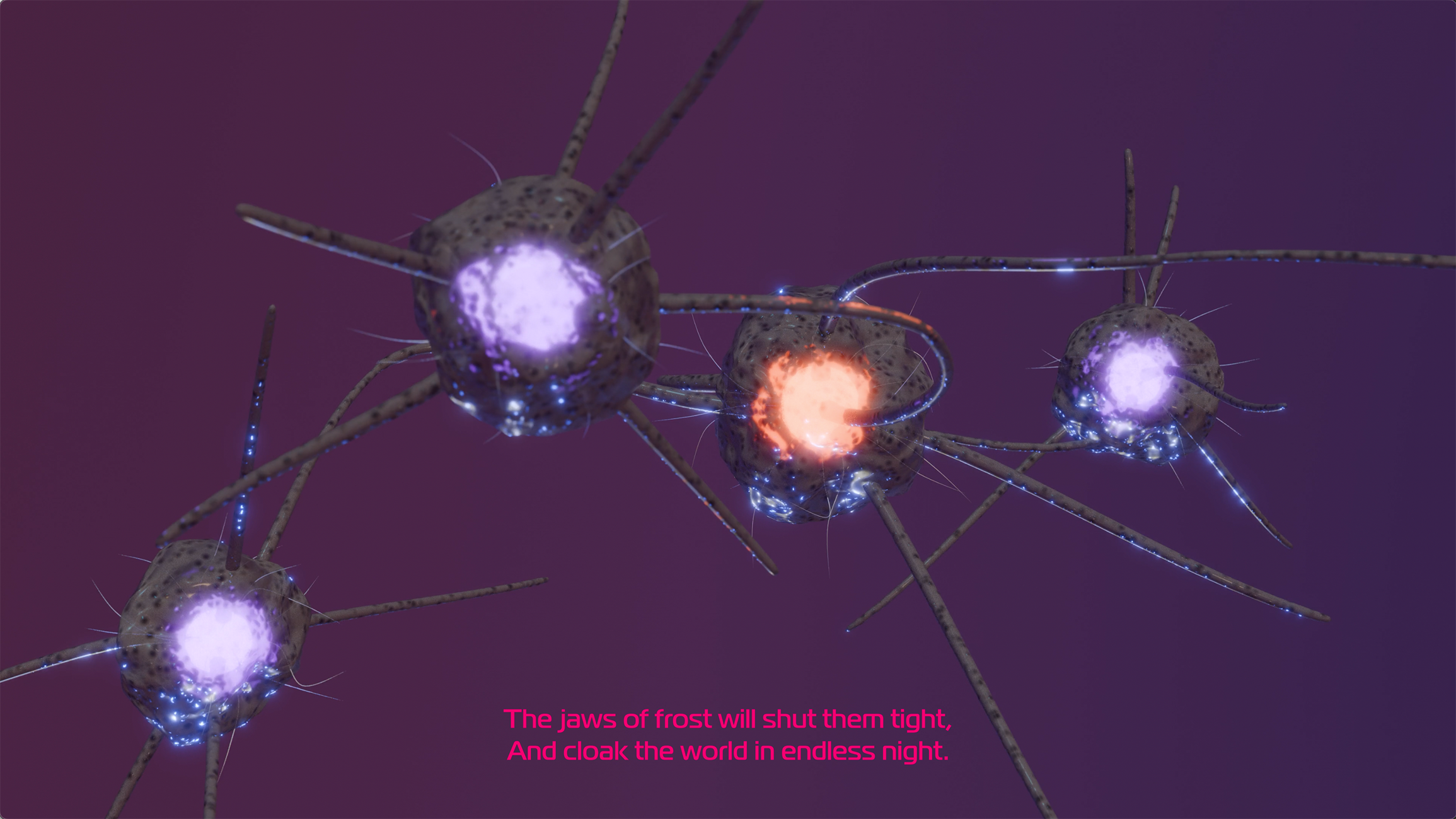
Ksenia Yurkova’s video Post-Iron investigates the relationship between humanity and culture/history, as well as questions of cultural responsibility and its influence on political processes. The work alternates between digitally constructed, scientific-looking objects and historically or geopolitically charged landscapes, which also explore humanity’s relationship with nature. Interspersed throughout are various “experts” and scholars. Some are historical figures speaking via photographs and voiceovers, delivering statements partly drawn from the utopian thinking of the early Soviet period. Others are contemporary scholars who initially appear serious, critical, humanistic, or progressive, yet their occasionally exaggerated and absurd expressions undermine their credibility. Post-Iron is a political, provocative satire that critically examines the figure of the “omniscient” expert—someone who often contributes less to knowledge than to the subversive affirmation and affective glorification of conspiratorial narratives.
Petra Noll-Hammerstiel